Verified Docket
Case notes
Study notes for Universal v. Nintendo: the case card, facts, procedure, holding, reasoning, separate opinions, what came next and study questions. Sources are listed at the end of the page.
Case card
| Field | Record |
|---|
| Full case name | Universal City Studios, Inc., Plaintiff, v. Nintendo Co., Ltd. and Nintendo of America, Inc., Defendants (on appeal: Plaintiff-Appellant / Defendants-Appellees; in 1986 also Cross-Appellee / Cross-Appellants) |
| Round 1 — the trademark claim | Universal City Studios, Inc. v. Nintendo Co., 578 F. Supp. 911 (S.D.N.Y. 1983), aff'd, 746 F.2d 112 (2d Cir. 1984) |
| Round 2 — Nintendo's counterclaims, fees and damages | Universal City Studios, Inc. v. Nintendo Co., 615 F. Supp. 838 (S.D.N.Y. 1985), aff'd, 797 F.2d 70 (2d Cir. 1986), cert. denied, 479 U.S. 987 (1986) |
| Related ruling | Coleco Industries, Inc. v. Universal City Studios, Inc., 637 F. Supp. 148 (S.D.N.Y. 1986) (Universal's interpleader against Nintendo dismissed) |
| Courts | S.D.N.Y.; Second Circuit; U.S. Supreme Court (certiorari only). No parallel citations were confirmed, so none are given |
| Trial judge | Robert W. Sweet, U.S. District Judge, S.D.N.Y. (both district court opinions and the Coleco ruling) |
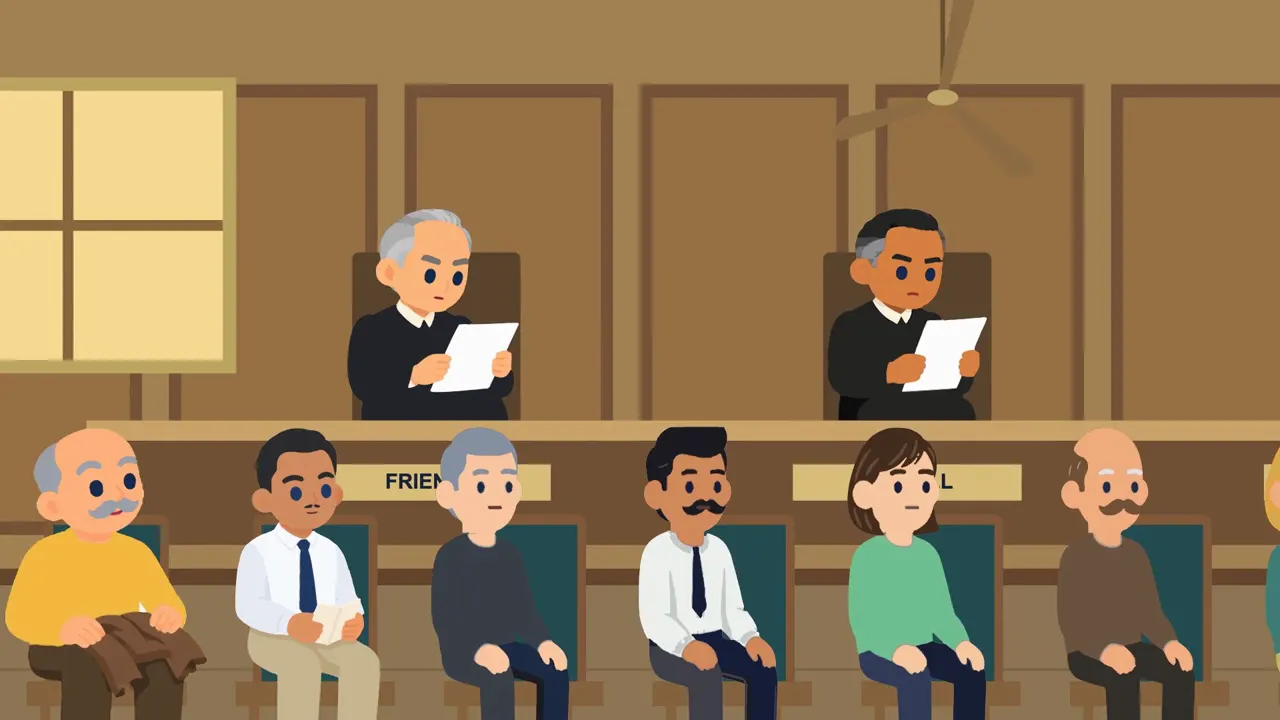
| 1984 appellate panel | Friendly, Meskill and Kearse, Circuit Judges; opinion by Judge Meskill; no separate opinions (3–0) |
| 1986 appellate panel | Meskill and Kearse, Circuit Judges, and Charles M. Metzner, U.S. District Judge (S.D.N.Y.) sitting by designation; opinion by Judge Metzner; no separate opinions (3–0) |
| Filed | 1982 in S.D.N.Y. The opinions disagree on the date: "June 29, 1982" (797 F.2d at 74; 615 F. Supp. at 850), "June 6" (615 F. Supp. at 841), "April 1982" (578 F. Supp. at 914) |
| Summary-judgment hearing | August 8, 1983 (578 F. Supp. at 914) |
| District court decided (round 1) | December 22, 1983 |
| 2d Cir. argued / decided (round 1) | May 23, 1984 / October 4, 1984 |
| Bench trial on counterclaims | "May 20 to 28" (615 F. Supp. at 842), seven days of testimony (at 841) |
| District court decided (round 2) | July 29, 1985 |
| 2d Cir. argued / decided (round 2) | June 16, 1986 / July 15, 1986 |
| Certiorari denied | December 1, 1986 (No. 86-590) |
| Docket numbers | No. 82 Civ. 4259 (RWS) (S.D.N.Y.); No. 1208, Docket 84-7095 (2d Cir. 1984); Nos. 1221, 1335, Dockets 86-7077, 86-7099 (2d Cir. 1986); No. 86-590 (U.S.); 84 Civ. 2596 (RWS) (Coleco) |
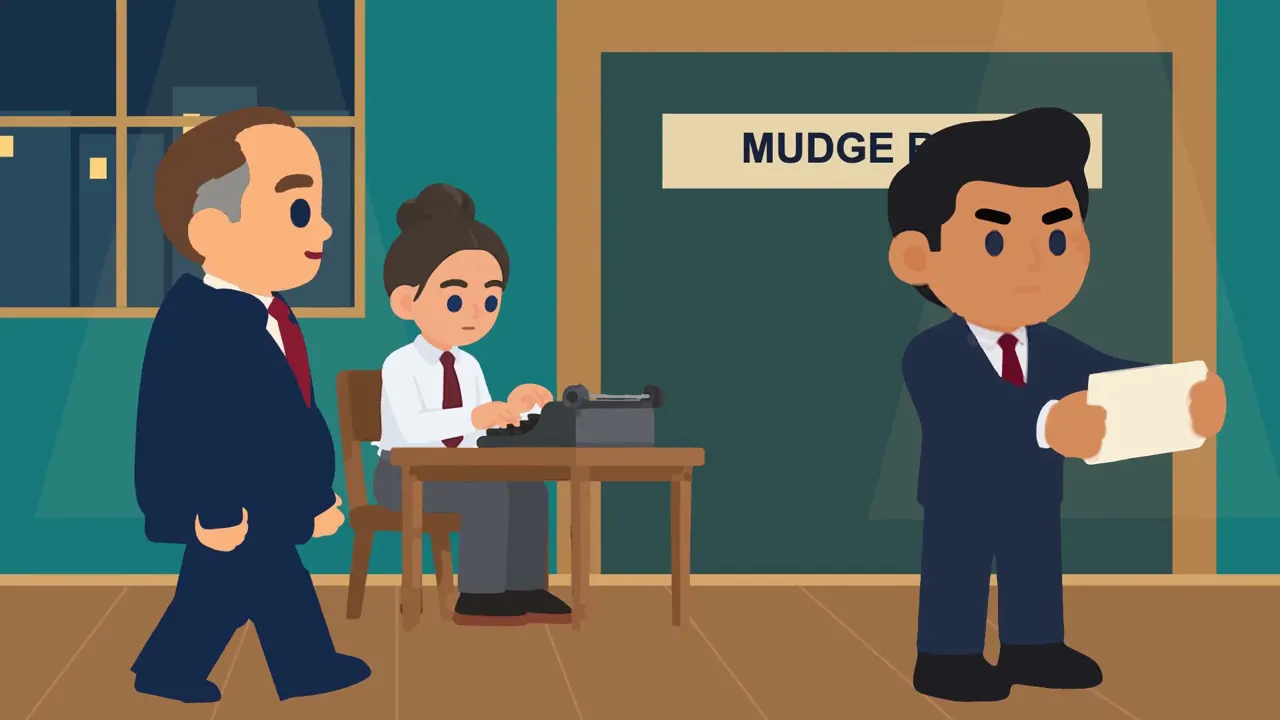
| Counsel | Universal: Townley & Updike (1983–85); Wachtell, Lipton, Rosen & Katz (1986 appeal). Nintendo: John J. Kirby, Jr., Mudge, Rose, Guthrie, Alexander & Ferdon |
| Outcome in one line | Universal's King Kong trademark suit failed for want of any triable likelihood of confusion; Universal was then held liable to Nintendo for bad-faith interference with Nintendo's licensees and for contributing to a copyright infringement, with fees and punitive damages, and the Supreme Court declined review. |
The story in 150 words
In 1981 Nintendo released the arcade game Donkey Kong, in which a carpenter named Mario climbs girders to rescue a woman from a gorilla. It was a hit. In April 1982 Universal City Studios claimed that the game infringed its rights in King Kong and demanded royalties. Coleco, about to launch a home version, paid. Nintendo refused, and Universal sued. Judge Robert Sweet found the two works so different that no reasonable jury could find likely confusion, and the Second Circuit affirmed in 1984. Then the tables turned. Nintendo's counterclaims showed that Universal had told a California court in the 1970s that King Kong had no trademark significance at all, and that its own staff had concluded it had no rights to license. The courts found that Universal sued in bad faith to share in Donkey Kong's profits, and Nintendo recovered about $1.6 million in damages and fees.
Facts (as the courts found them)
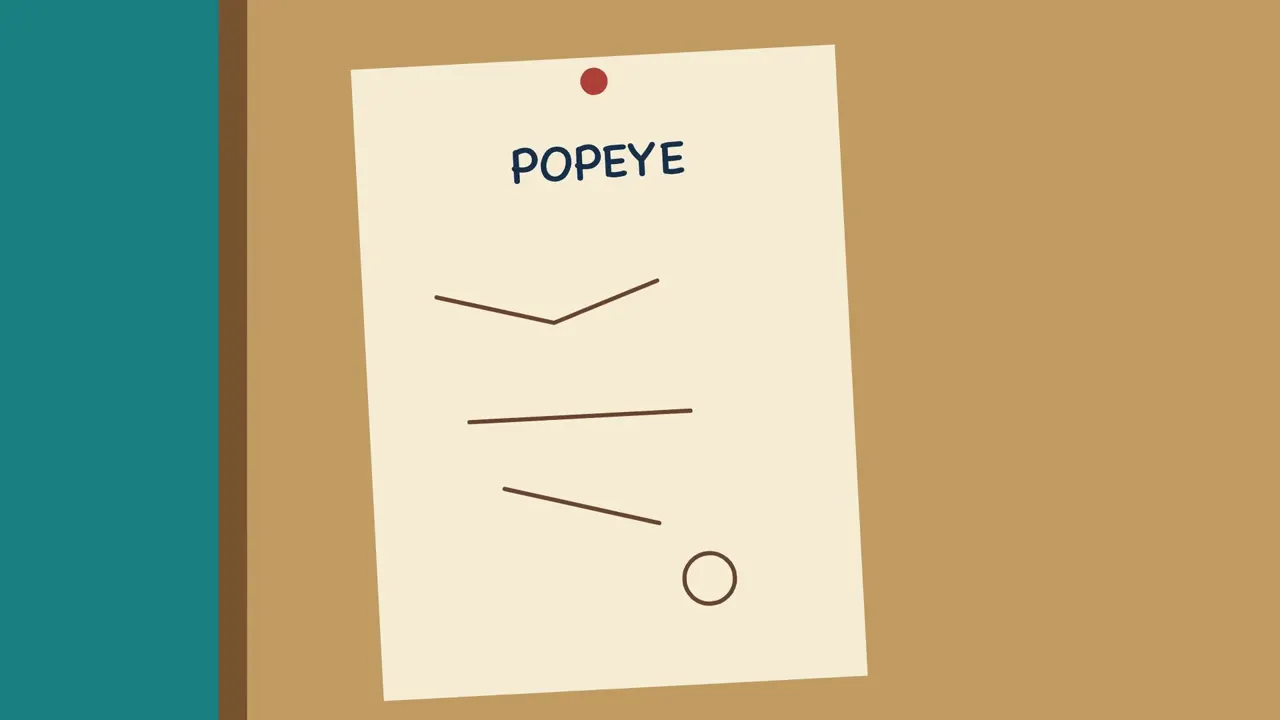
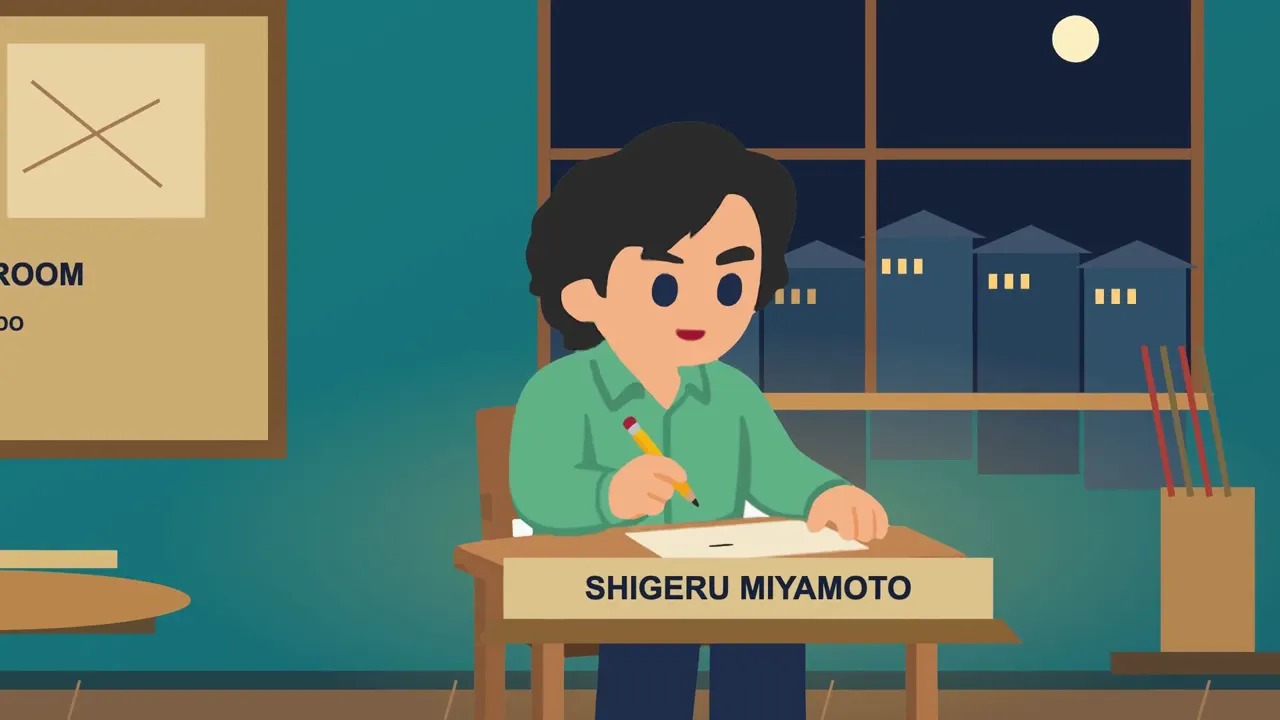
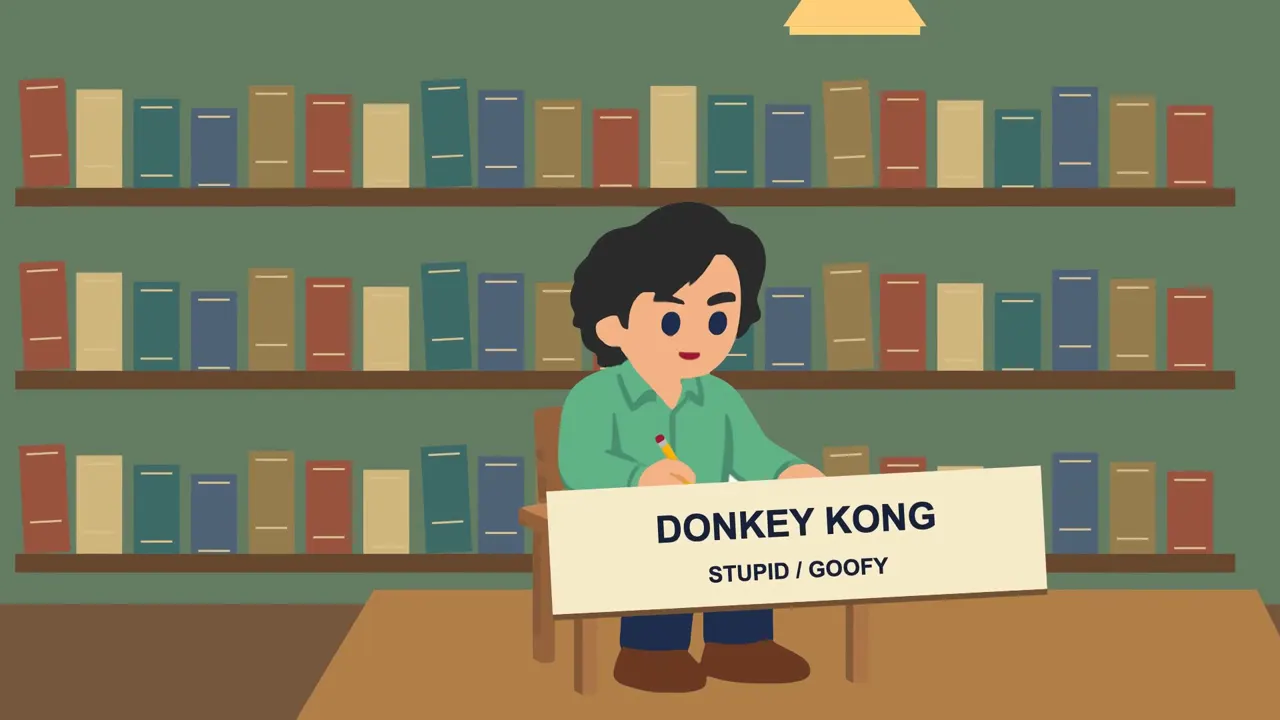
The game. Development "began in March 1981" with Popeye characters; when it proved "not technically possible" to show them on screen, they became "Mario the Carpenter" and a comical gorilla (578 F. Supp. at 917–18). "Kong" was chosen as readily understood to denote a gorilla; "donkey" came from a Japanese/English dictionary as a translation of a word meaning stupid or "goofy" (at 918). The designer, whom the opinion spells "Shigeru Miyomoto," "testified by deposition that he had seen King Kong movies, and that he referred to the Donkey Kong gorilla as 'King Kong' while designing the game" (at 918).
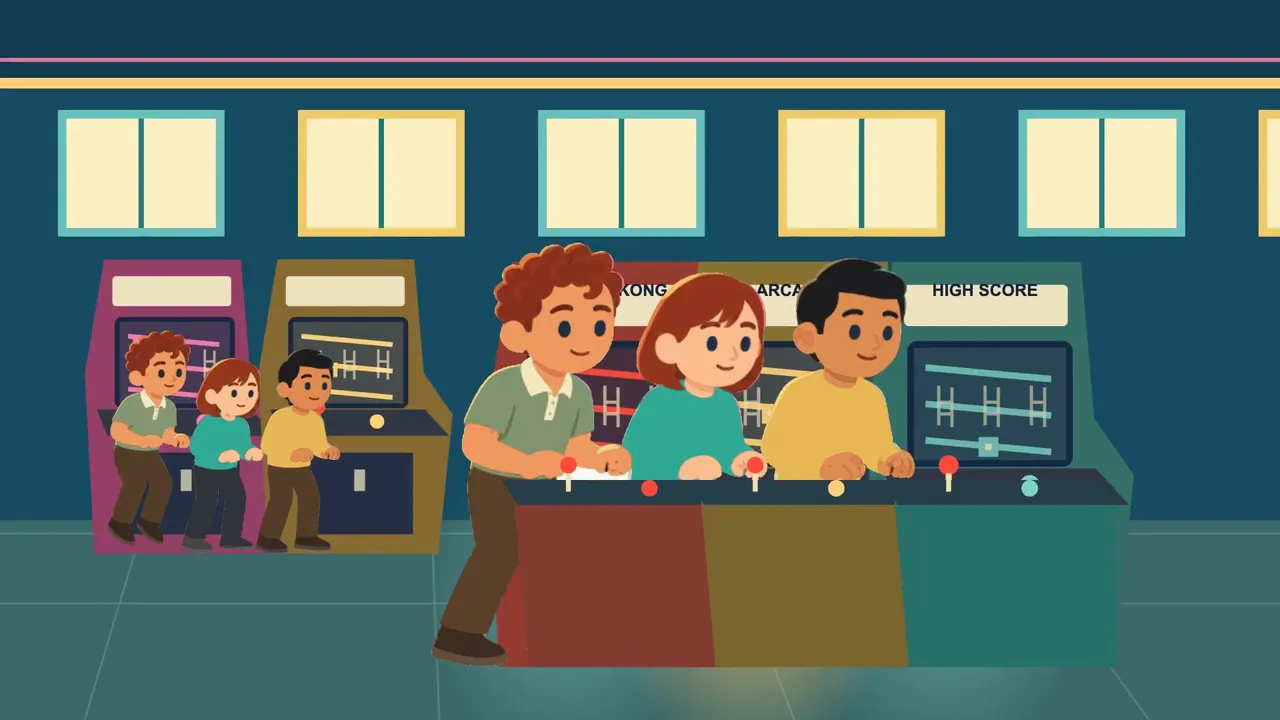
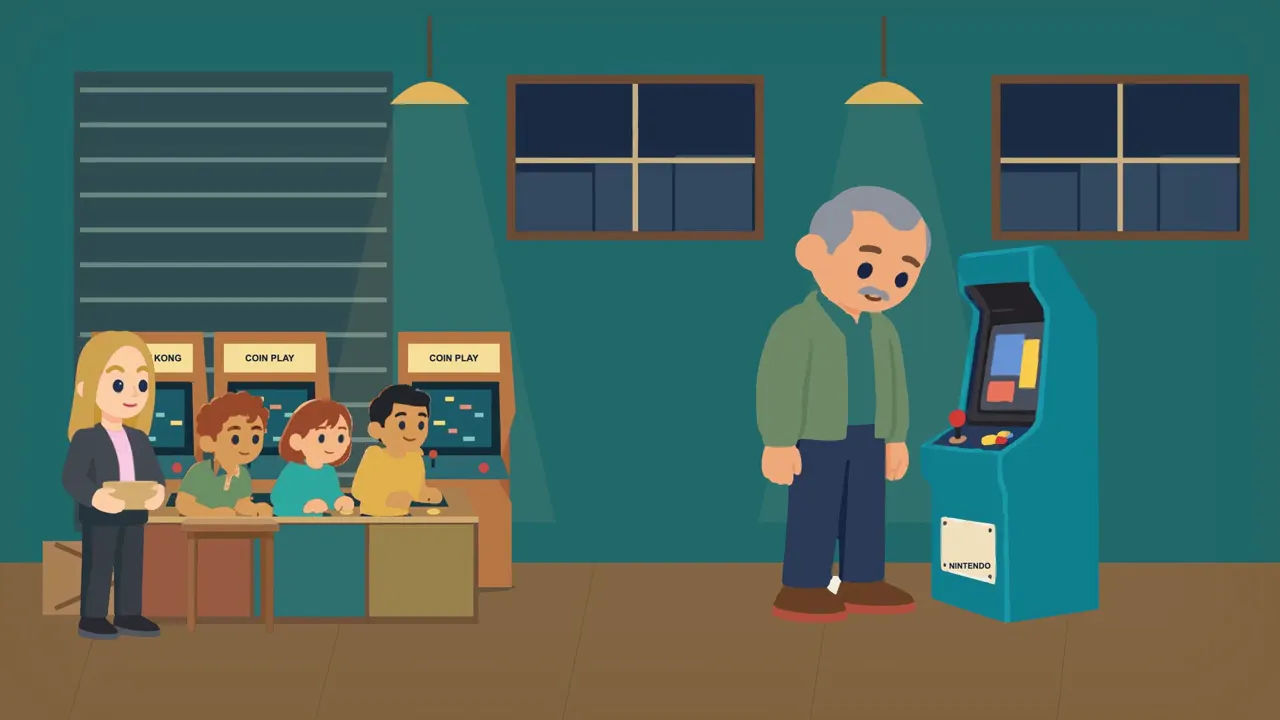
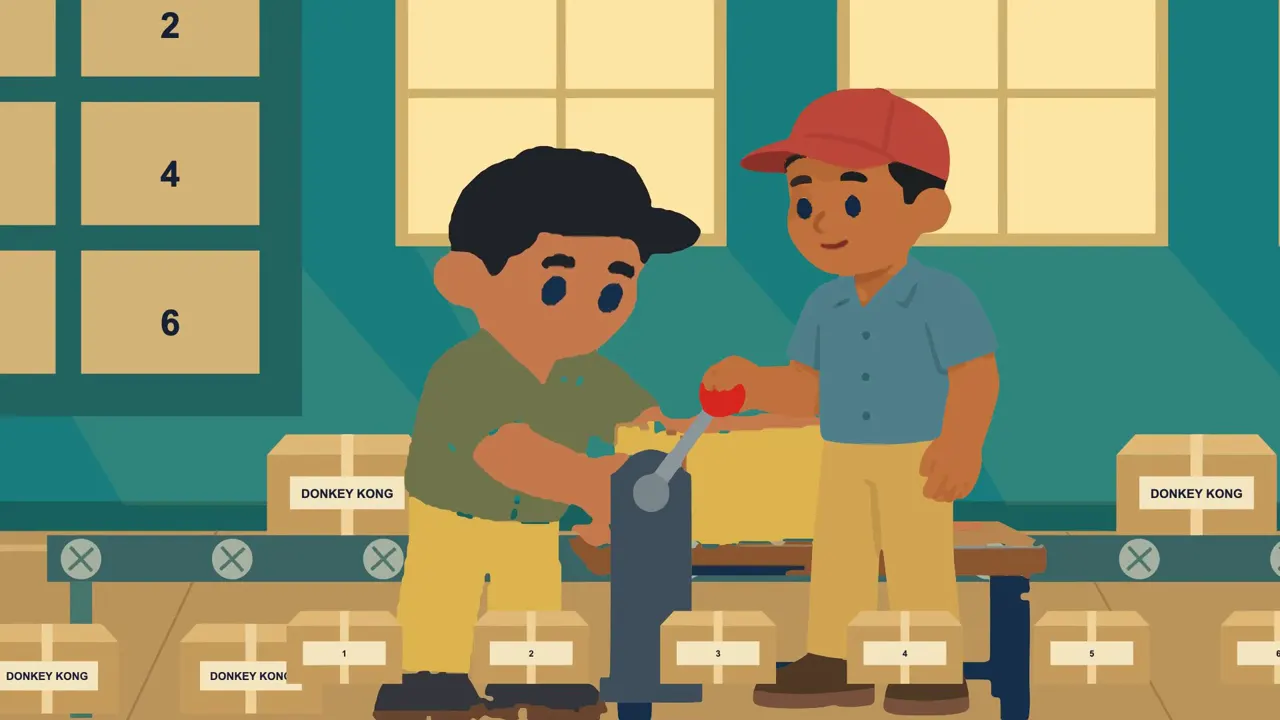
Its success. Nintendo "has realized over $180 million from the sale of approximately 60,000 video arcade machines in the United States and Canada" (746 F.2d at 113–14), and licensed the characters to over 50 licensees, including Coleco, Atari and Ruby-Spears (578 F. Supp. at 918; 797 F.2d at 74).
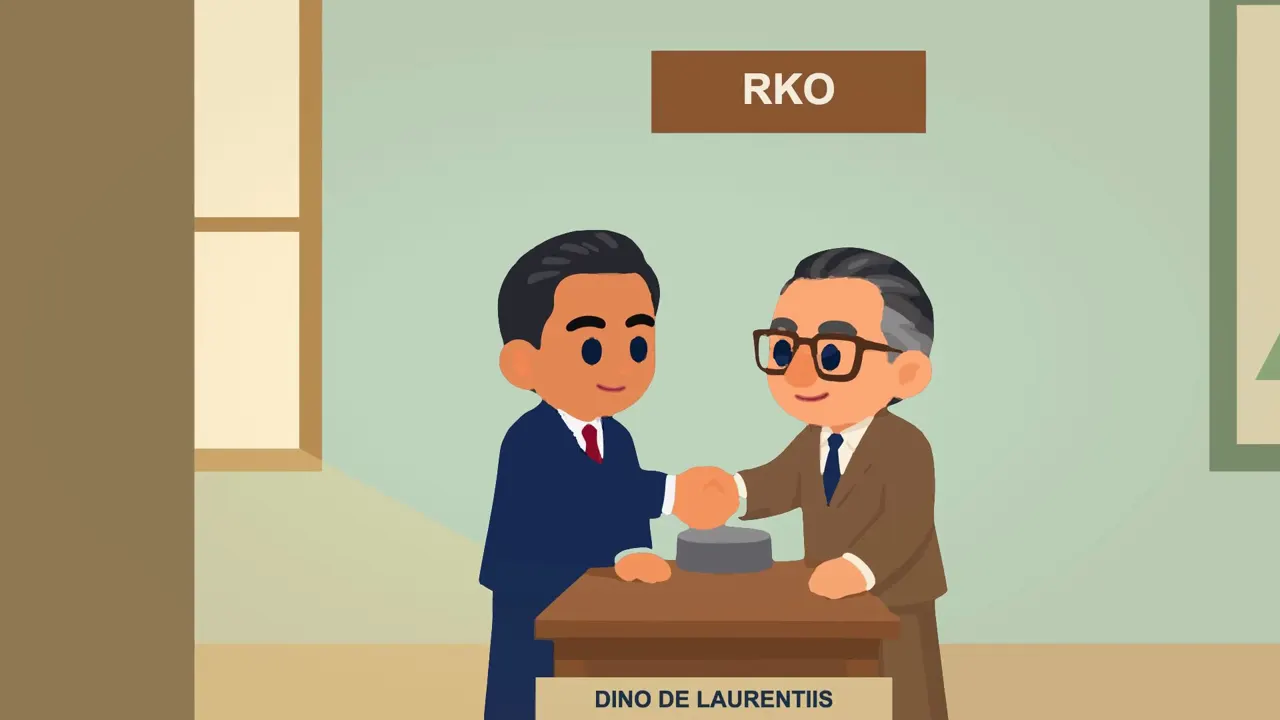
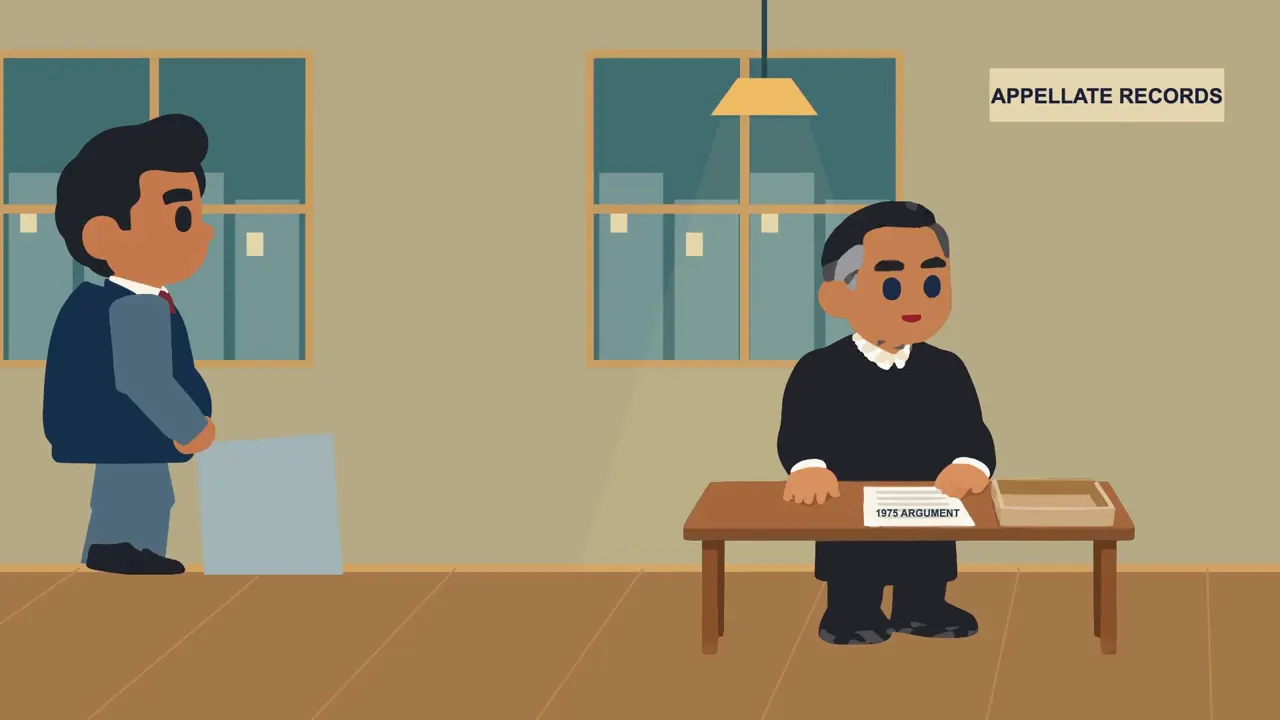
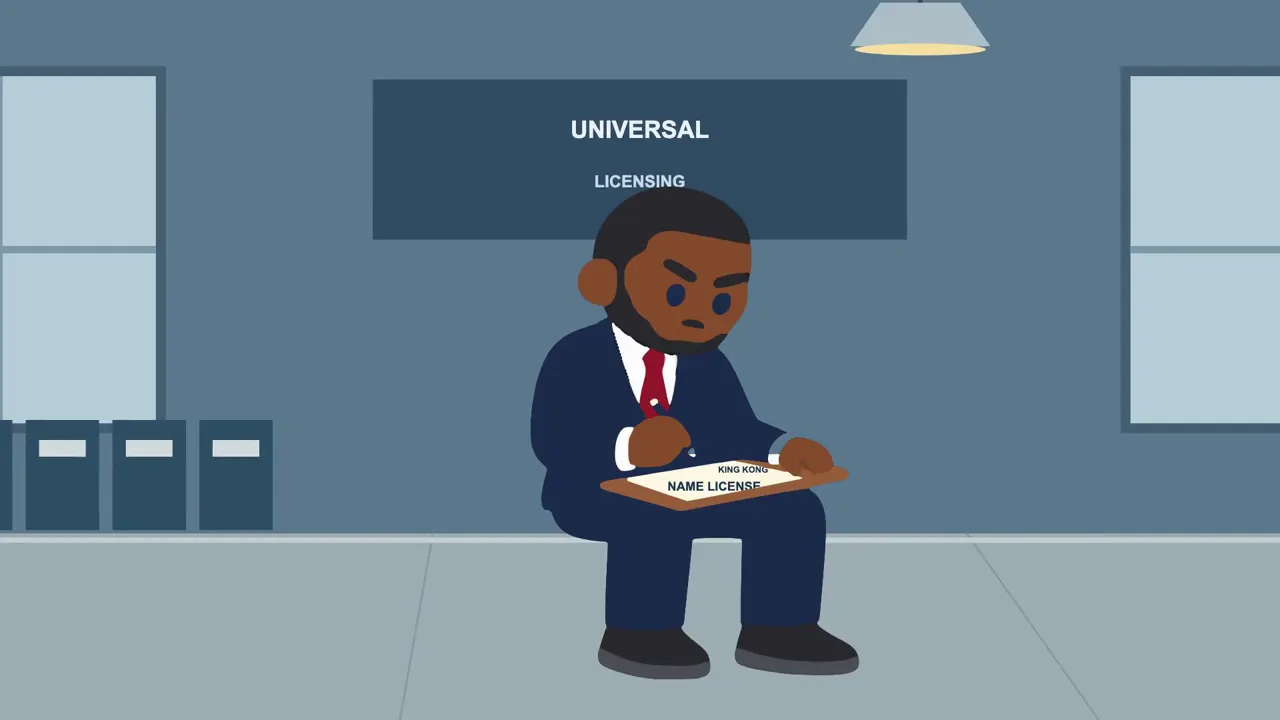
King Kong's tangled title. RKO released the 1933 film; RKO kept the copyright in that film and its depictions of the ape; the 1976 remake belonged to the Dino De Laurentiis company (spelled "DiLaurentiis" in the opinions) (578 F. Supp. at 914–15, 917). In 1975 Universal sued in federal court in California for a declaration that the copyright on the King Kong story had lapsed so that it could make its own remake (797 F.2d at 72–73). Universal's trial counsel, Stephen Kroft, argued "that King Kong could not be a trademark because it had no secondary meaning and was part of the ordinary English language" (at 73). On November 24, 1976 the California court held the story, "as embodied in the original novel," in the public domain and found no evidence of secondary meaning in the title (at 73). The heir of King Kong's creator, Richard Cooper, won a judgment against RKO and then "assigned all of his rights in King Kong to Universal for $200,000" (at 73). The RKO judgment was vacated when Universal and RKO settled on appeal (at 73 n.1).
The demand. On April 27, 1982 Universal's president, Sidney Sheinberg, told Coleco that Universal "owned King Kong"; telexes followed the next day (615 F. Supp. at 847). Coleco agreed by May 5 and signed a covenant not to sue on May 12 (at 847–48). At a May 6 meeting, Kroft said Universal's rights were "open and shut," and a Universal vice president, Robert Hadl, "said Kroft would send a chain of title" (at 848). None was ever sent (at 849). At a May 21 lunch, Sheinberg said Universal's "litigation department even turned a profit" and invoked the Betamax suit against Sony (at 849).
Inside Universal. In early 1982, after a "long conversation" with former general counsel Joseph Di Muro, MCA licensing vice president Sifuentes ("Laura" in the trial opinion, "Loretta" in the 1986 appeal) testified that "we (Universal/MCA) didn't have any rights in King Kong to license" (615 F. Supp. at 845–46). Di Muro denied the conversation; the court found her testimony credible (at 846).
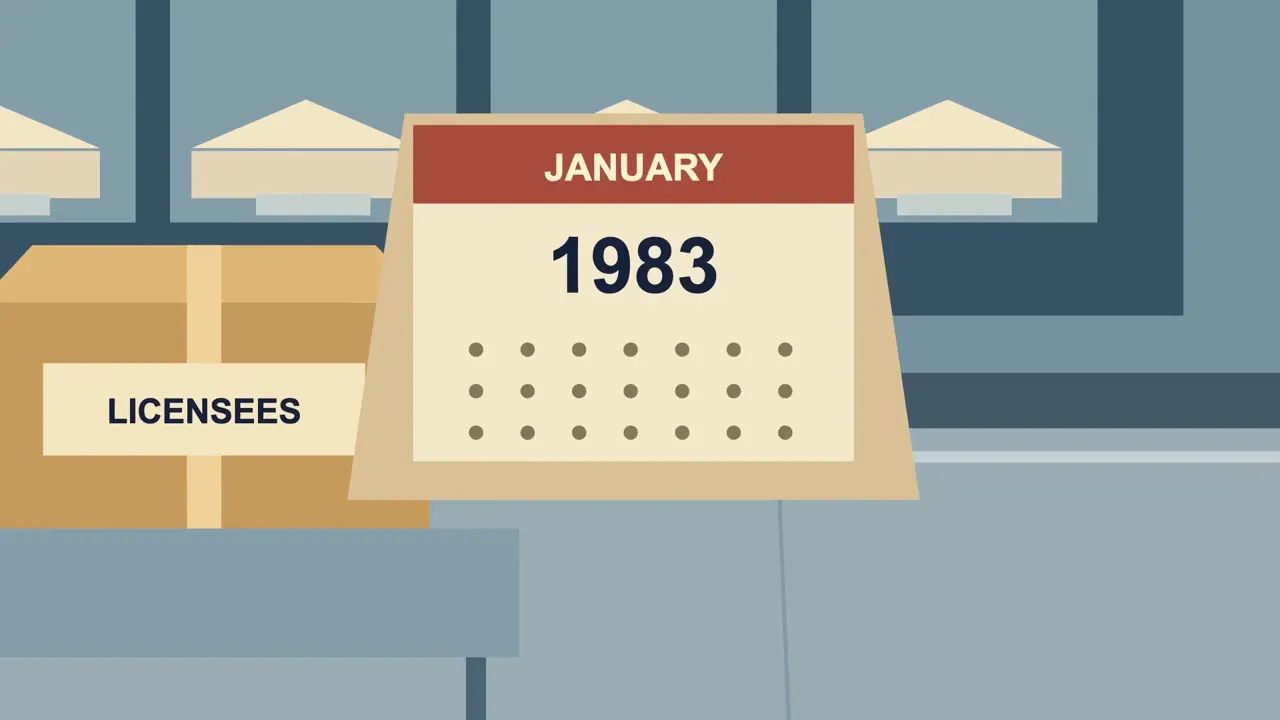
The letters. On January 3, 1983, using a list of licensees obtained in discovery, Universal sent cease-and-desist letters to Nintendo's licensees (797 F.2d at 74; 615 F. Supp. at 852). Seven licensees stopped producing; six of them also refused to pay their guaranteed royalties (615 F. Supp. at 853). Milton Bradley and Ralston Purina refused Universal and kept selling without being sued (797 F.2d at 74; 615 F. Supp. at 852–53).
The Tiger license. In 1981 Tiger's president "saw a new Donkey Kong video arcade game in Japan, and decided that Tiger should produce a similar game," and obtained a King Kong license from Universal (797 F.2d at 73–74). Universal first terminated it, then reinstated a modified, nonexclusive license after "some minor alterations" (at 74). On May 14, 1982 Hadl "admitted to Lincoln that the Tiger game was a 'knock-off' of Donkey Kong" (615 F. Supp. at 849).
Procedural history
- C.D. Cal., 1975–1981. Universal City Studios, Inc. v. RKO General, Inc., C.V. 75-3526-R: story in public domain, no secondary meaning; judgment vacated after settlement (797 F.2d at 72–73 & n.1; 578 F. Supp. at 916–17). Known only through the Nintendo opinions.
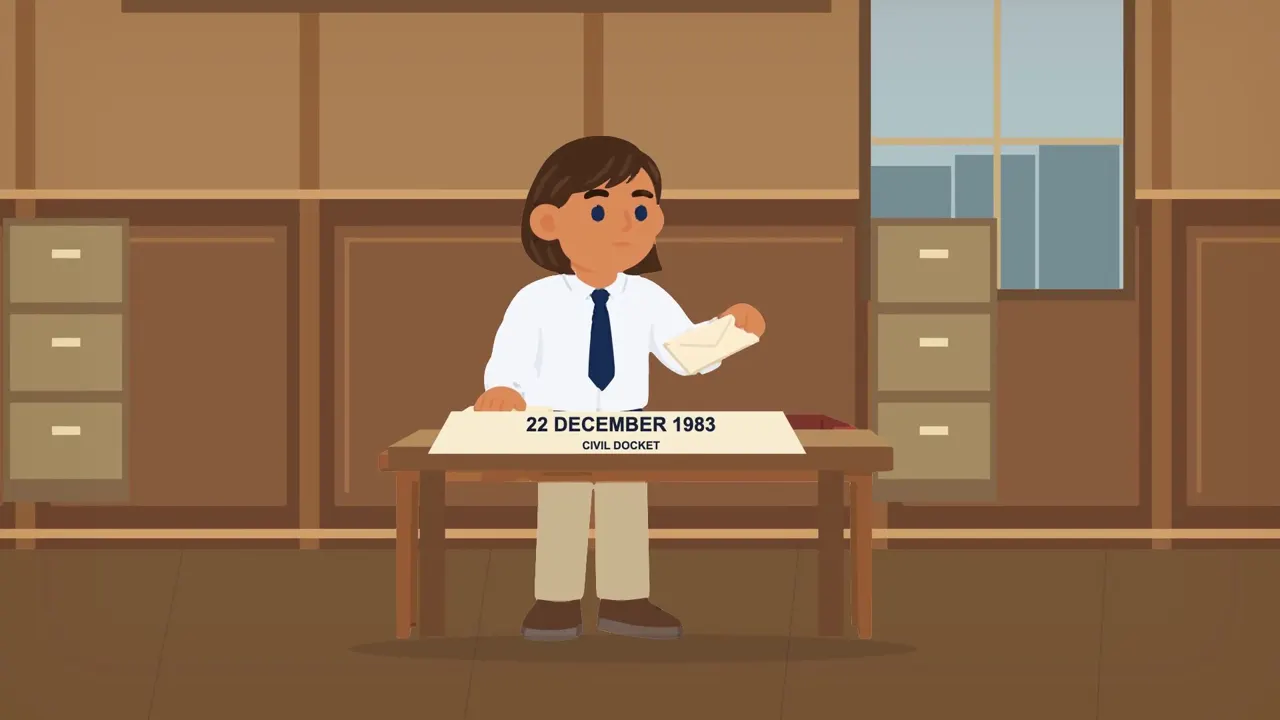
- S.D.N.Y., Dec. 22, 1983. Summary judgment for Nintendo on all of Universal's claims: no valid trademark (assignment in gross), no secondary meaning, no likelihood of confusion, no dilution (578 F. Supp. at 921–30). Nintendo's estoppel arguments were rejected (at 919–21).
- 2d Cir., Oct. 4, 1984. Affirmed on likelihood of confusion alone, assuming arguendo that Universal had a valid mark (746 F.2d at 115, 120).
- S.D.N.Y., July 29, 1985 (bench trial). For Nintendo on tortious interference (in part) and vicarious copyright infringement; against Nintendo on unjust enrichment; fees and punitive damages awarded (615 F. Supp. at 863–65).
- 2d Cir., July 15, 1986. Affirmed on every issue both sides appealed (797 F.2d at 72, 79).
- S.D.N.Y., June 16, 1986 (Coleco). Universal's interpleader against Nintendo over Coleco's $4,680,613 dismissed with leave to refile if Nintendo's misappropriation claim were revived (637 F. Supp. at 149–50).
- U.S. Supreme Court, Dec. 1, 1986. Certiorari denied, 479 U.S. 987.
Questions presented
Round 1. (a) Did Universal own an enforceable trademark in King Kong? (b) Even assuming it did, could a reasonable jury find that Donkey Kong was likely to confuse purchasers about source or sponsorship? (c) Did Universal state a New York dilution claim?
Round 2. (a) Can a bad-faith litigation threat be tortious interference under New York law? (b) Was this an "exceptional case" for Lanham Act fees, and were punitive damages proper? (c) Was Universal vicariously liable for Tiger's copying? (d) Could Nintendo recover the $4.76 million Universal collected from Coleco, Atari and Ruby-Spears?
The holding and the rule
1984 holding.
"We hold that Universal failed to raise a question of fact on the issue of the likelihood of consumer confusion and thus Nintendo was entitled to summary judgment on the Lanham Act claim." — 746 F.2d at 115
The rule it applied: "the crucial issue in an action for trademark infringement or unfair competition is whether there is any likelihood that an appreciable number of ordinarily prudent purchasers are likely to be misled, or indeed simply confused, as to the source of the goods in question" (746 F.2d at 115, quoting Mushroom Makers). Summary judgment is proper "if the court is satisfied that the products or marks are so dissimilar that no question of fact is presented" (at 116).
1986 holdings.
"The district court did not err when it found that Universal brought its Lanham Act claim in bad faith merely to join in the profits from Donkey Kong." — 797 F.2d at 77
The rule on threats: under the Restatement adopted in New York, a lawsuit or threat is wrongful "if the actor has no belief in the merit of the litigation," or if it is made "in bad faith, intending only to harass the third parties and not to bring his claim to definitive adjudication" (797 F.2d at 75).
The reasoning
Round 1: the trademark claim
Steps 1–2 — No valid mark (district court only). "Trademark rights do not exist in the abstract, to be bought and sold as a distinct asset" (578 F. Supp. at 922). The judgment moving rights from RKO to Cooper was "the quintessential transfer in gross," so "because Cooper never owned the King Kong trademark, he could not have sold it to Universal" (at 923). And with RKO and De Laurentiis owning the film images, Universal held "some undetermined third image" (at 925) that could not signify a single source.
Step 3 — Compare the works as a whole. The Second Circuit chose the narrowest ground. Following its Superman case, it compared "total concept and feel" (746 F.2d at 116). The trial judge had watched the game and the films:
"The farcical, childlike and nonsexual Donkey Kong creates a humorous impression by jumping up and down and strutting back and forth to tease Mario." — 578 F. Supp. at 928
"At best, Donkey Kong is a parody of King Kong, but a parody of this sort is not an infringement." — 578 F. Supp. at 928
The appeals court added that "the fact that Donkey Kong so obviously parodies the King Kong theme strongly contributes to dispelling confusion on the part of consumers" (746 F.2d at 116), and concluded:
"The two properties have nothing in common but a gorilla, a captive woman, a male rescuer and a building scenario." — 746 F.2d at 117
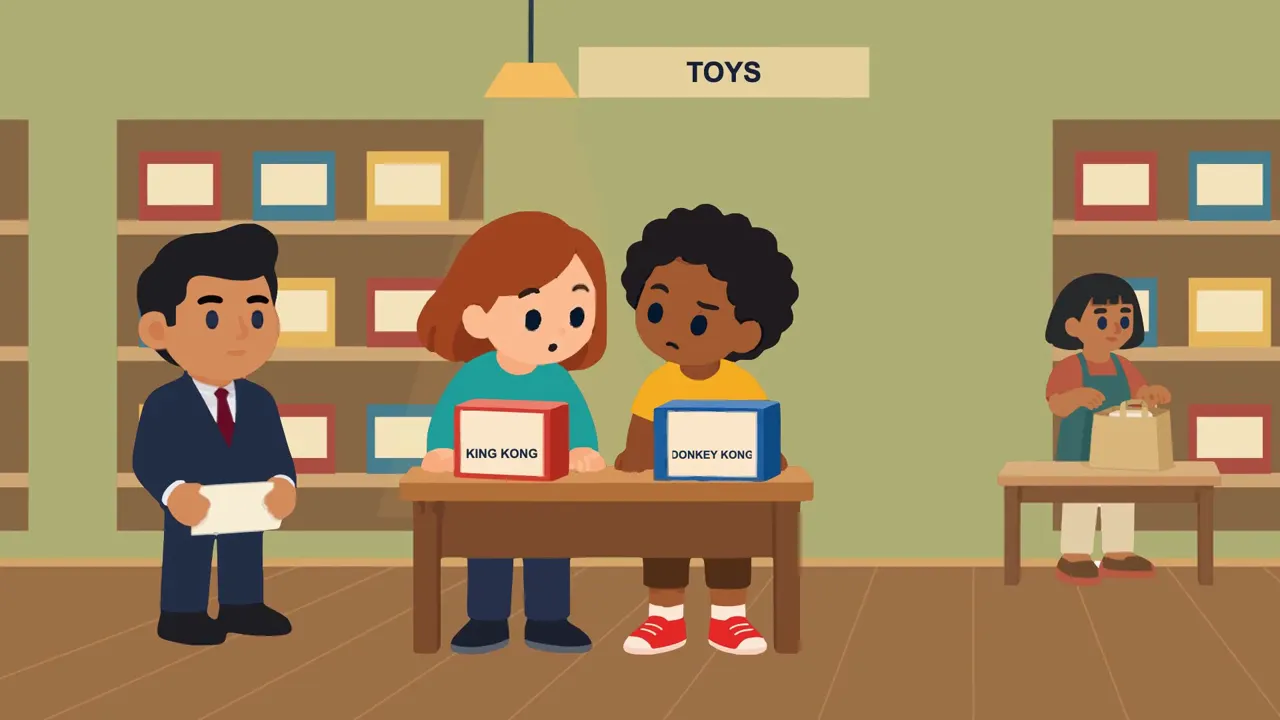
Step 4 — Compare names as a whole. "[E]ach trademark must be compared in its entirety" (746 F.2d at 117). "Nintendo's use of the prefix 'Donkey' has no similarity in meaning or sound with the word 'King.'" (at 117). Taken as a whole, "'Donkey Kong' does not evoke or suggest the name of King Kong" (at 117–18).
Step 5 — The survey. Universal surveyed "150 arcade, bowling alley and pizza parlor owners and managers who had purchased or leased one or more Donkey Kong games," and 18 percent answered yes to a question about approval by "the people who produce the King Kong movies" (746 F.2d at 118). The court found it "so badly flawed that it cannot be used to demonstrate the existence of a question of fact on the likelihood of consumer confusion" (at 118): it asked about films Universal did not own; it used "an improper universe" of past buyers; and it was "an obvious leading question in that it suggested its own answer" (at 118). Asked "As far as you know, who makes Donkey Kong?", "not one suggested Universal or the makers of the King Kong movies" (at 118). The court accepted "that there may be a few confused consumers" but held that did not make summary judgment improper (at 118 n.8).
Step 6 — Intent and dilution. Any presumption from the designer's inspiration failed because "Universal concedes that the presumption is rebutted where no question of fact exists as to the likelihood of confusion" (746 F.2d at 119). There was also no triable question of blurring (at 120).
Round 2: the counterclaims
Steps 7–8 — Threats can be tortious; the about-face. "[U]nder New York law litigation or the threat of litigation can give rise to a claim for tortious interference with contractual relations" (797 F.2d at 75). "If anyone knew what the law was on this point under the facts of this case, it was Universal" (797 F.2d at 75). "Universal offered no explanation for its change in position, and in fact completely ignored the fact that it reversed course" (at 76). The court stressed that this was "not an application of judicial estoppel" but "only an inference as to the party's belief in the merits of its subsequent lawsuit" (at 75 n.3).
Step 9 — Other evidence of disbelief. Sheinberg "either refused or was unable to identify the nature of Universal's rights in King Kong," and Universal never sued the licensees who refused to pay, which showed it wanted "quick settlement payments from third parties" (797 F.2d at 76).
Step 10 — Advice of counsel failed. Universal never called Kroft. The trial court wrote: "It is inferred from the absence of Kroft's testimony and his continuing close relationship with Universal that had he testified his testimony would have been unfavorable to Universal on the subject of its trademark claim" (615 F. Supp. at 847, quoted at 797 F.2d at 76–77).
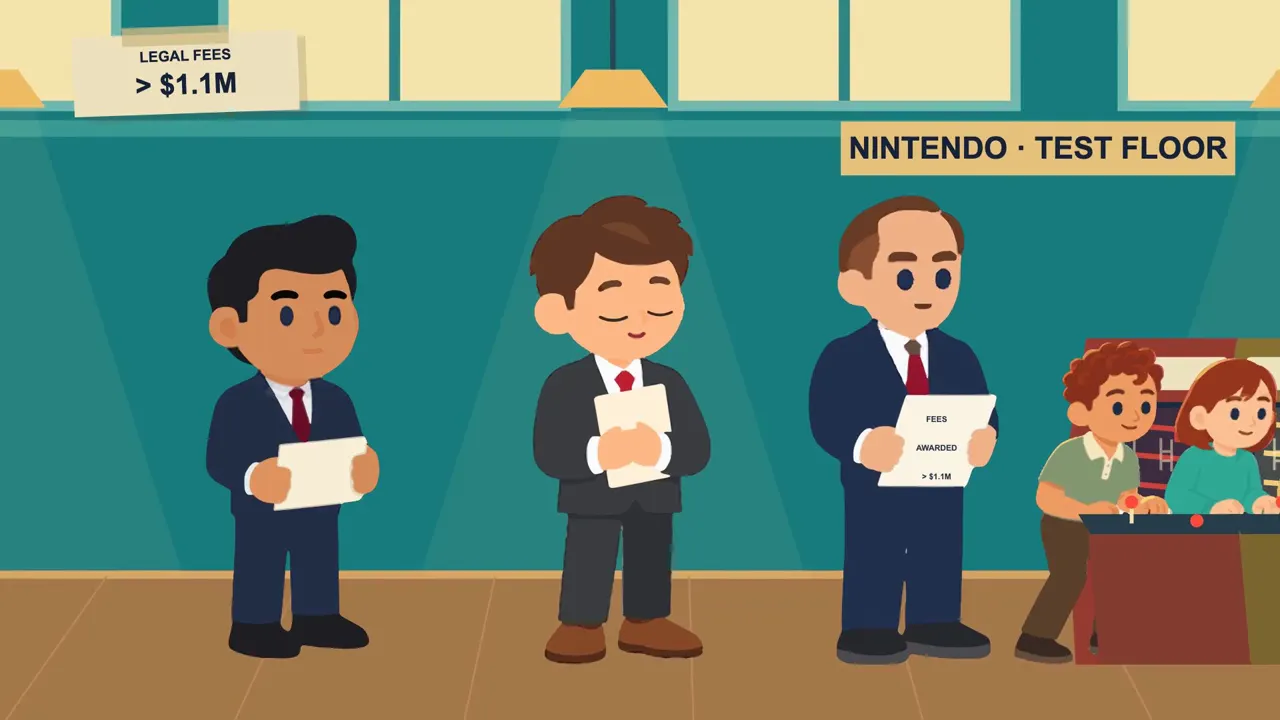
Step 11 — Fees and punitive damages. Fees of $1,142,545.70 were proper under Lanham Act § 35, which allows fees "in exceptional cases" (797 F.2d at 77). Punitive damages of $222,498.28 were proper because Universal "embarked on a deliberate, systematic campaign to coerce all of Nintendo's third party licensees to either stop marketing Donkey Kong products or pay Universal royalties" (at 78), and:
"Universal's assertions in court were based not on any good faith belief in their truth, but on the mistaken belief that it could use the courts to turn a profit." — 797 F.2d at 78
Step 12 — Tiger and copyright. "Neither the ramps and ladders motif nor the gorilla/female captive scenario is independently protectible" (615 F. Supp. at 858), but "The interaction of the characters, obstacles, background, and music in Donkey Kong are arbitrary, fanciful, and sufficiently distinctive such that they deserve protection from a near knock-off such as Tiger" (at 859–60). The Second Circuit agreed that this specified the protected expression "with reasonable precision" (797 F.2d at 78) and affirmed $56,689.41 in Universal's Tiger profits and $83,525.05 in copyright fees (at 78).
Step 13 — No windfall for Nintendo. Nintendo's licenses "permitted the licensees to settle any infringement actions brought against them," so there was no breach, and "Any injustice harmed not Nintendo, however, but the three companies that paid Universal" (797 F.2d at 79).
Concurrences and dissents
None. Both Second Circuit panels were unanimous and no judge wrote separately. The only "separate" voice in the record is the footnote in which the 1986 panel limited its own reasoning: it was drawing an inference about belief, not applying judicial estoppel (797 F.2d at 75 n.3).
Doctrine map
| Area | Test or rule | How this case fits | Leading authority (verified) |
|---|
| False designation of origin, Lanham Act § 43(a), 15 U.S.C. § 1125(a) | Likelihood that an appreciable number of ordinarily prudent purchasers will be confused about source or sponsorship | Claim failed on confusion; mark validity left undecided on appeal | Polaroid Corp. v. Polarad Electronics Corp., 287 F.2d 492, 495 (2d Cir. 1961) (multi-factor test) |
| Character marks | Compare the "total concept and feel" of the characters | Applied to the gorilla characters | Warner Bros. Inc. v. American Broadcasting Cos., 720 F.2d 231, 241, 246 (2d Cir. 1983) |
| Assignment in gross | A mark passes only with the business or goodwill it symbolizes | District court: the Cooper-to-Universal chain conveyed no mark | United Drug Co. v. Theodore Rectanus Co., 248 U.S. 90, 97 (1918) |
| Parody and confusion | Obvious parody can dispel confusion; parody is weighed within the confusion analysis | Cited for that point by later Second Circuit cases | Cliffs Notes, Inc. v. Bantam Doubleday Dell Publishing Group, Inc., 886 F.2d 490, 495 (2d Cir. 1989); Hormel Foods Corp. v. Jim Henson Productions, Inc., 73 F.3d 497, 504 (2d Cir. 1996); Jack Daniel's Properties, Inc. v. VIP Products LLC, No. 22-148, slip op. at 18, 20 (U.S. June 8, 2023) |
| Survey evidence | Fair question, right universe, no leading | A standard example of a discounted survey | 746 F.2d at 118 |
| Dilution | Strong mark plus likelihood of dilution (then N.Y. Gen. Bus. Law § 368-d) | Failed for lack of a strong mark and of blurring | Federal dilution added as 15 U.S.C. § 1125(c) in 1996 (Pub. L. 104-98) and rewritten in 2006 (Pub. L. 109-312) |
| Copyright in video games | Ideas unprotected (17 U.S.C. § 102(b)); the audiovisual display can be protected | Tiger copied protected expression | Stern Electronics, Inc. v. Kaufman, 669 F.2d 852, 856 (2d Cir. 1982); Atari, Inc. v. North American Philips Consumer Electronics Corp., 672 F.2d 607 (7th Cir. 1982) |
| Secondary liability | One who knowingly "induces, causes or materially contributes" to infringement is liable | Universal licensed the knock-off | Gershwin Publishing Corp. v. Columbia Artists Management, Inc., 443 F.2d 1159, 1162 (2d Cir. 1971) |
| Fee shifting, Lanham Act § 35, 15 U.S.C. § 1117(a) | "Exceptional cases" (fee clause added in 1975, Pub. L. 93-600) | Bad-faith suit "to join in the profits" was exceptional | Octane Fitness, LLC v. ICON Health & Fitness, Inc., 572 U.S. 545, 554 (2014); Sleepy's LLC v. Select Comfort Wholesale Corp., 909 F.3d 519, 530–31 (2d Cir. 2018) |
| Copyright fees, 17 U.S.C. § 505 | Discretion; plaintiffs and defendants treated alike | $83,525.05 awarded | Fogerty v. Fantasy, Inc., 510 U.S. 517, 534 (1994) |
| Interference by litigation threats | Wrongful if no belief in merit, or bad faith to harass (Restatement (Second) of Torts § 767 cmt. c, as adopted in New York) | Liability for the January 1983 letters | 797 F.2d at 75 (citing Guard-Life Corp. v. S. Parker Hardware Mfg. Corp., 50 N.Y.2d 183, 191 (1980), as quoted there) |
Where the case sits. Round 1 decides confusion as a matter of law, as the Superman case had a year earlier. Round 2 is rarer: a trademark plaintiff paying for its own suit because it did not believe in it.
What happened next
- Certiorari denied, December 1, 1986 (479 U.S. 987).
- Coleco's refund suit. Coleco sued Universal on April 12, 1984 to recover what it had paid. Universal tried to bring Nintendo in by interpleader; Judge Sweet dismissed that on June 16, 1986, with leave to refile only if Nintendo's misappropriation claim were revived (637 F. Supp. at 149–50). The 1986 appeal then said Coleco's case, "not this one, represents the proper means to determine the propriety of Universal's conduct" (797 F.2d at 79).
- How courts cite it. The Second Circuit relies on the 1984 opinion for the "ultimate test" of source confusion in parody cases (Cliffs Notes, 886 F.2d at 495), for treating a character's appearance in its main work as the source of its goodwill (Hormel, 73 F.3d at 504, citing 746 F.2d at 117 n.7), and for granting summary judgment when marks are too dissimilar (Nabisco, Inc. v. Warner-Lambert Co., 220 F.3d 43, 46 (2d Cir. 2000); Tommy Hilfiger Licensing, Inc. v. Nature Labs, LLC, 221 F. Supp. 2d 410, 416 (S.D.N.Y. 2002)). The 1986 opinion's "bad faith merely to join in the profits" language was one of the older Second Circuit fee standards that Sleepy's (909 F.3d at 530–31) replaced with the Octane Fitness test.
- Statutes. Section 43(a) was amended generally in 1988 (Pub. L. 100-667); federal dilution arrived in 1996 and was revised in 2006.
- The game. The Strong National Museum of Play inducted Donkey Kong into its World Video Game Hall of Fame in 2017; its page notes the "failed lawsuit" by Universal.
- The people. Judge Sweet served until his death in 2019; Judge Friendly died on March 11, 1986, before the second appeal (Federal Judicial Center).
Common myths vs the record
| Myth | Record |
|---|
| "Nintendo won because it proved King Kong was in the public domain." | The 1983 court rejected Nintendo's collateral- and judicial-estoppel arguments based on the California case (578 F. Supp. at 919–21). The 1984 appeal never decided whether Universal had a mark (746 F.2d at 115). The California history mattered later, as evidence of Universal's belief (797 F.2d at 75 & n.3). |
| "The court said parody is a defense to trademark infringement." | Parody mattered because it helped show there was no confusion (746 F.2d at 116–17). The Supreme Court later confirmed that parody is weighed inside the confusion analysis when a mark is used as a mark (Jack Daniel's, slip op. at 18). |
| "The survey showed nobody was confused." | Eighteen percent said yes; the court discounted the survey as flawed and accepted that a few consumers might be confused (746 F.2d at 118 & n.8). |
| "Universal owned the King Kong films." | "Universal does not claim any ownership rights in the 1933 or 1976 King Kong films" (746 F.2d at 118). |
| "Nintendo collected Universal's $4.76 million." | It lost that claim; the money belonged in equity to the companies that paid it (797 F.2d at 79). |
| "It was a copyright case." | Universal sued in trademark, false designation and dilution (746 F.2d at 113). Copyright entered only through Nintendo's counterclaim about the Tiger game. |
Study questions
- Why did Universal sue under trademark law rather than copyright law?
- What did the 18-percent survey ask, and why did the court give it no weight?
- Why did the Second Circuit refuse to compare "Kong" with "Kong" alone?
- What is an "assignment in gross," and why did Judge Sweet think Universal's chain of title was one?
- Why did the Second Circuit assume, rather than decide, that Universal had a valid mark? What are the advantages of deciding on the narrowest ground?
- Coleco, Atari and Ruby-Spears all paid Universal. Why did those payments hurt Universal's case in 1983 and fail to help Nintendo in 1986?
- How did the 1986 court use Universal's 1976 argument without applying judicial estoppel? Is that distinction persuasive?
- Which pieces of evidence most strongly showed that Universal did not believe in its claim? Rank them.
- Under Octane Fitness and Sleepy's, would the result on Lanham Act fees be the same today? What facts would matter most?
- Where is the line between the unprotected "gorilla/female captive scenario" and the protected expression that Tiger copied?
Hypothetical A. A studio validly owns the trademark in a famous robot character. A developer releases a comic platform game whose robot's name puns on it. Asked "Who makes this game?", 9 percent of players name the studio. Apply the 1984 opinion and Jack Daniel's.
Hypothetical B. A company's in-house lawyer concludes its claim is weak. It still sends demand letters to forty retailers of a rival's product, sues no one who refuses, and settles with three who pay. Using 797 F.2d 70, what claims might the rival bring, and what defense would the company need?