Verified Docket
Case notes
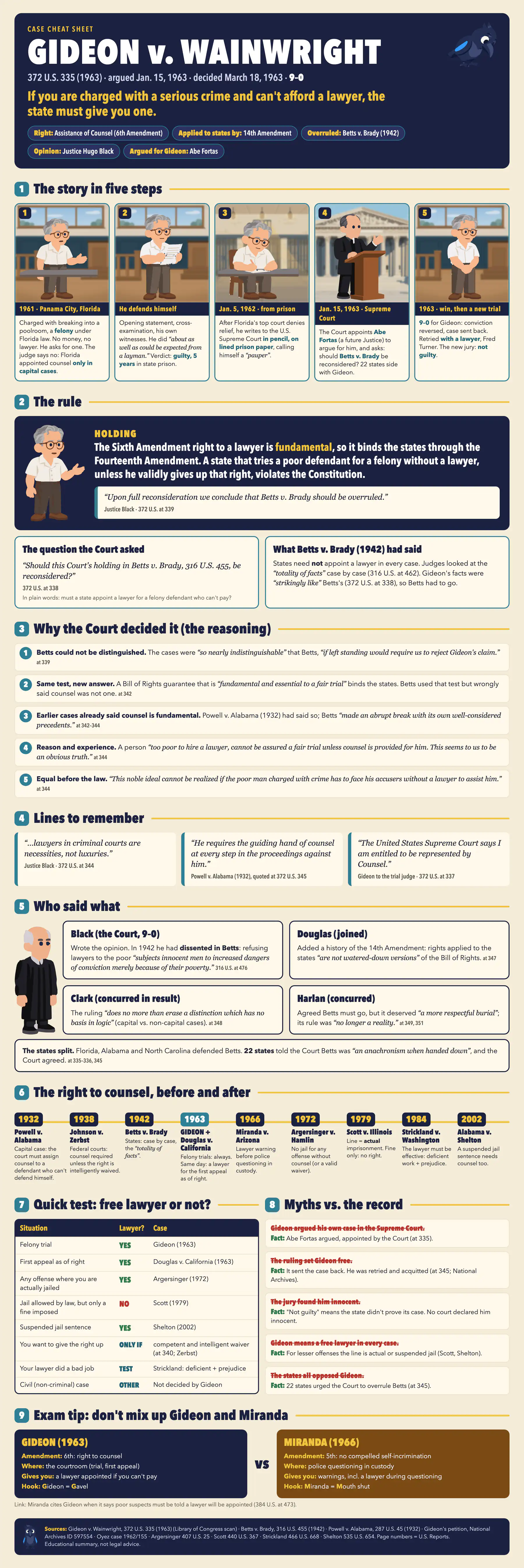
Study notes for Gideon v. Wainwright: the case card, facts, procedure, holding, reasoning, separate opinions, what came next and study questions. Sources are listed at the end of the page.
Case card
| Field | Record |
|---|
| Full case name | Gideon v. Wainwright, Corrections Director (caption as printed: "GIDEON v. WAINWRIGHT, CORRECTIONS DIRECTOR.") |
| Citations | Gideon v. Wainwright, 372 U.S. 335, 83 S. Ct. 792, 9 L. Ed. 2d 799 (1963) |
| Court | Supreme Court of the United States, on certiorari to the Supreme Court of Florida |
| Docket number | No. 155 (October Term, 1962) |
| Certiorari | Granted, 370 U.S. 908; counsel appointed for Gideon, 370 U.S. 932 (both as cited at 372 U.S. 335, 338) |
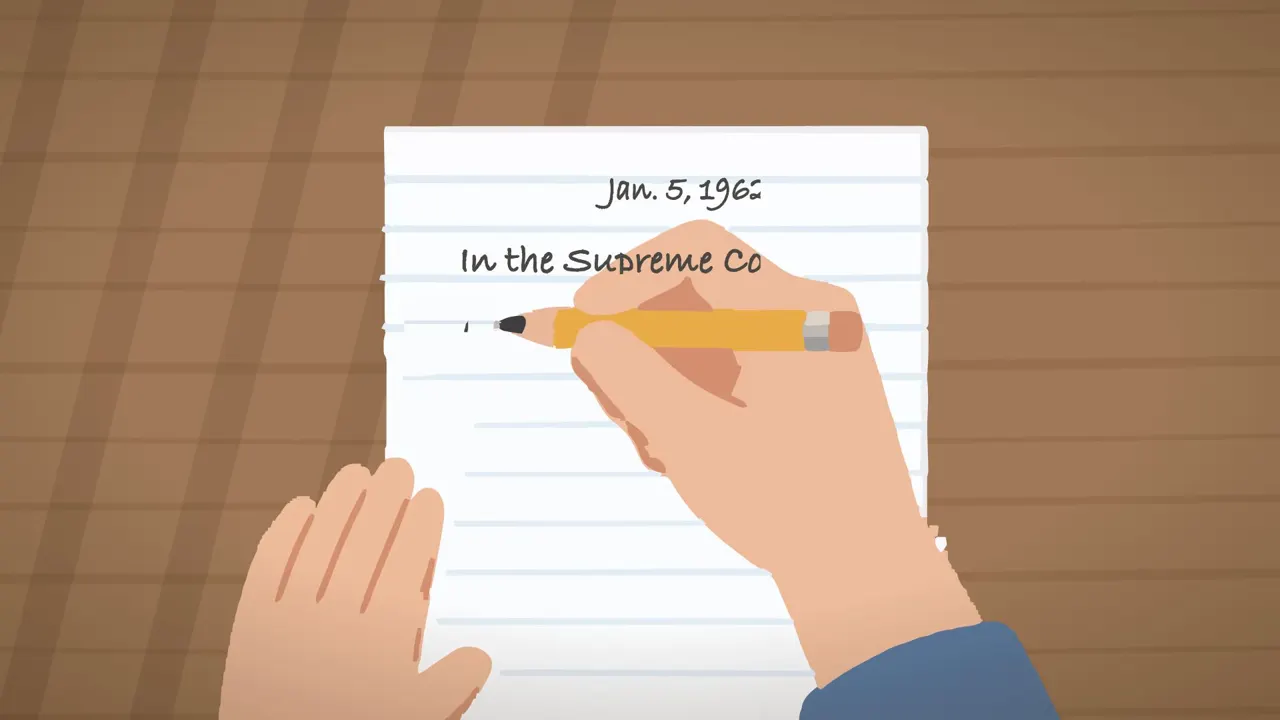
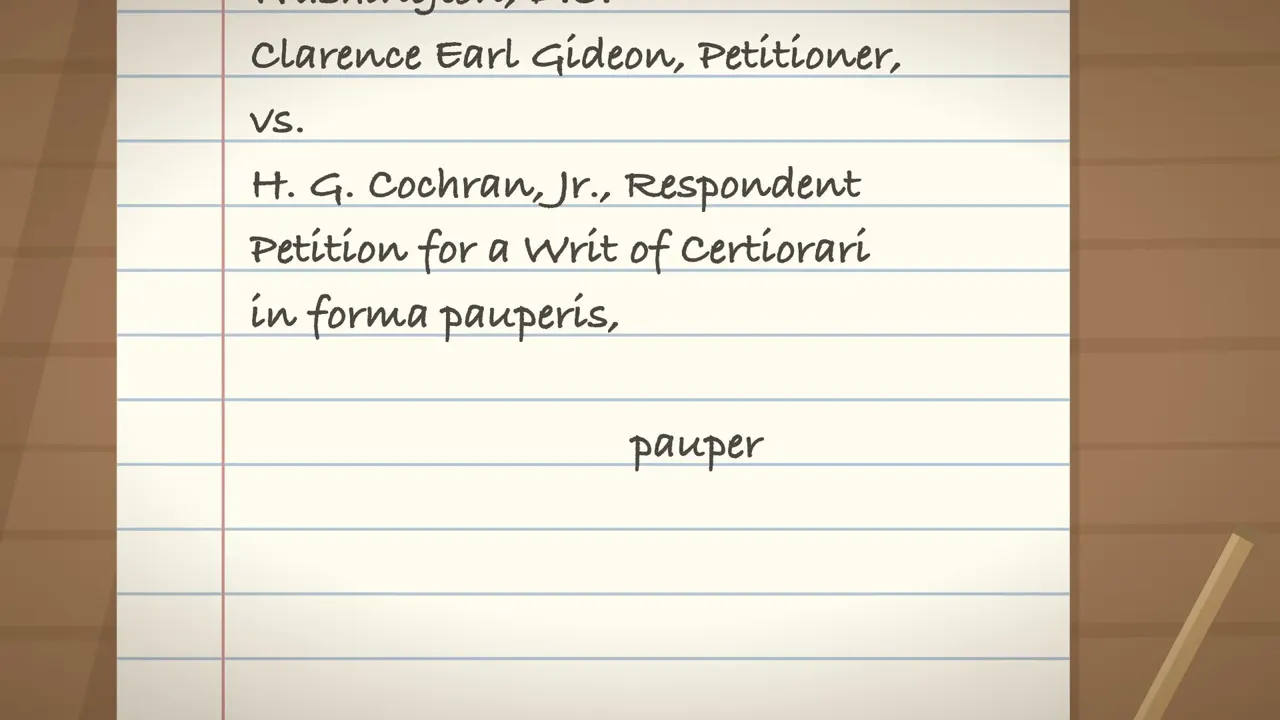
| Filed | Gideon's handwritten petition for a writ of certiorari is dated January 5, 1962 (National Archives Identifier 597554) |
| Argued | January 15, 1963 |
| Decided | March 18, 1963 |
| Opinion of the Court | Justice Hugo L. Black |
| Separate opinions | Douglas, J. (joining the Court's opinion); Clark, J. (concurring in the result); Harlan, J. (concurring) |
| Vote | 9–0 (no dissent) |
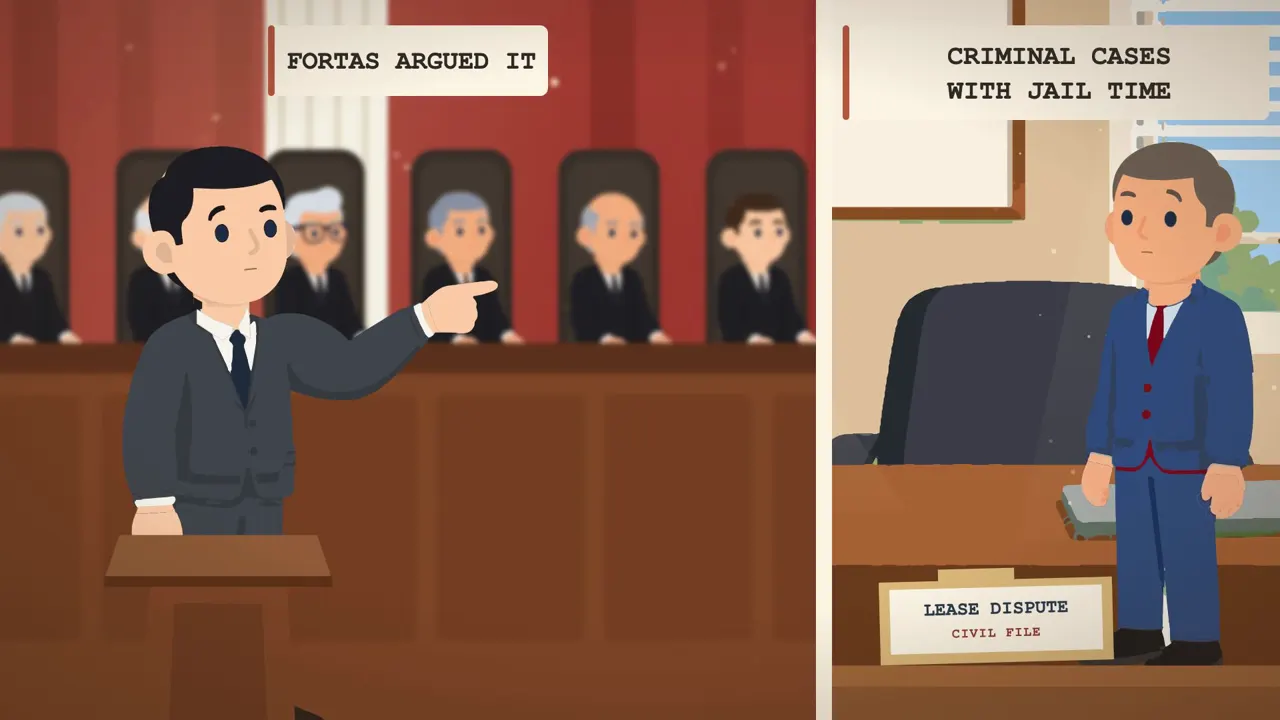
| Counsel | Abe Fortas, by appointment of the Court, for Gideon; Bruce R. Jacob, Assistant Attorney General of Florida, for the State; J. Lee Rankin for the ACLU et al. as amici urging reversal; George D. Mentz, Assistant Attorney General of Alabama, for Alabama as amicus urging affirmance |
| Respondent | Louie L. Wainwright, Director, Division of Corrections (Oyez case record) |
| Outcome in one line | Betts v. Brady overruled; a State must provide counsel to a defendant in a felony prosecution who cannot afford one; Gideon's conviction reversed and the case remanded to the Florida Supreme Court. |
Companion cases in this pack
| Case | Citation | Vote | Author |
|---|
| Powell v. Alabama | 287 U.S. 45, 53 S. Ct. 55, 77 L. Ed. 158 (1932); Nos. 98, 99 and 100; argued Oct. 10, decided Nov. 7, 1932 | 7–2 (Butler, J., dissenting, joined by McReynolds, J.) | Sutherland, J. |
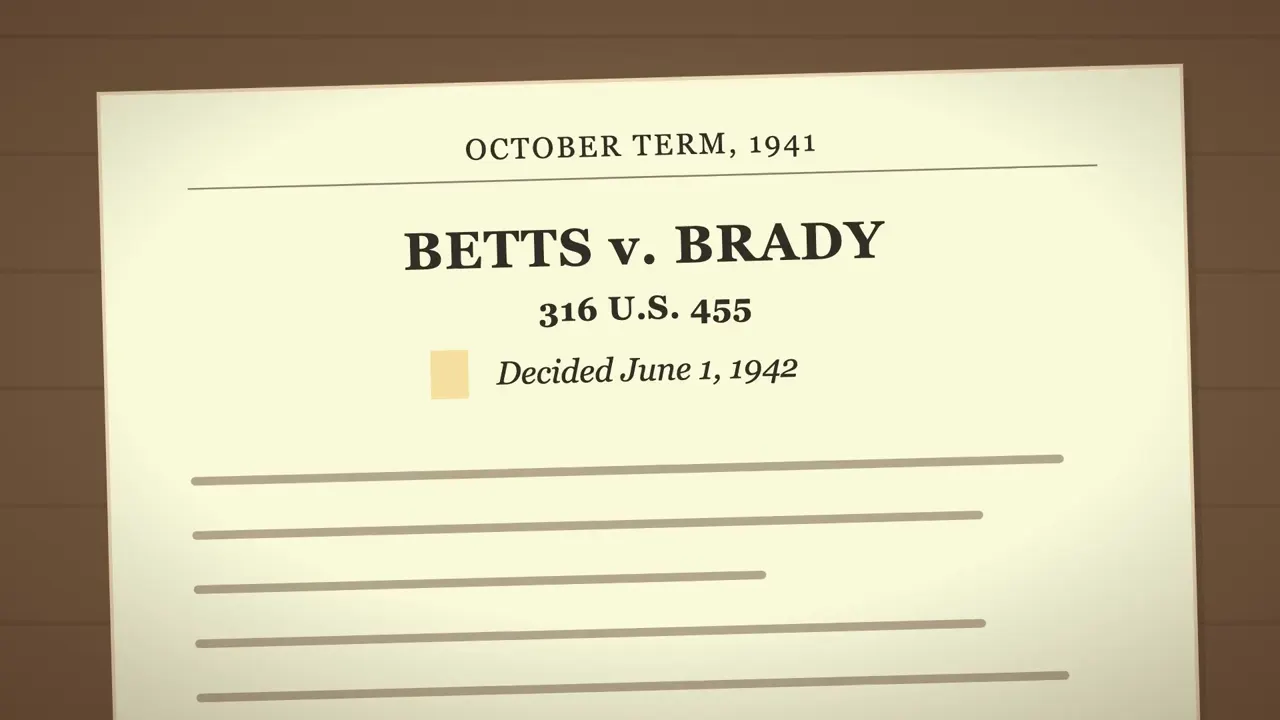
| Betts v. Brady | 316 U.S. 455, 62 S. Ct. 1252, 86 L. Ed. 1595 (1942); No. 837; argued Apr. 13–14, decided June 1, 1942 | 6–3 (Black, J., dissenting, joined by Douglas and Murphy, JJ.) | Roberts, J. |
The story in 150 words
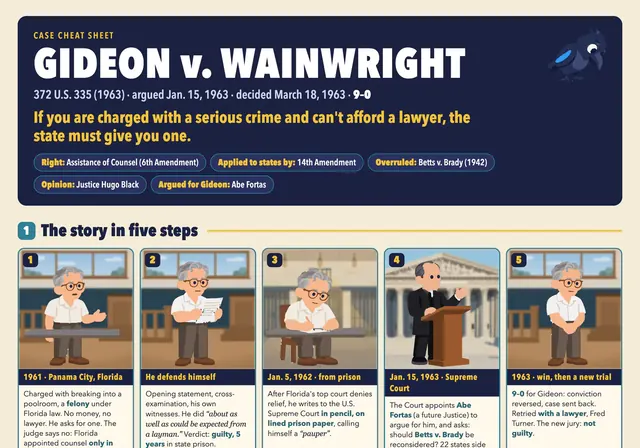
After his arrest in 1961, Clarence Earl Gideon stood trial in a Florida court for breaking into a poolroom. He had no money and no lawyer, and he asked the judge to appoint one. The judge refused: Florida appointed counsel only in capital cases. Gideon defended himself, lost, and got five years. From prison he wrote, in pencil, to the U.S. Supreme Court. The Court took the case, appointed a prominent Washington lawyer, Abe Fortas, to argue for him, and asked whether its 1942 ruling in Betts v. Brady, which let states refuse lawyers to poor defendants unless special circumstances existed, should be reconsidered. On March 18, 1963, all nine justices agreed it should go. Justice Hugo Black, who had dissented in Betts, wrote that lawyers in criminal courts are "necessities, not luxuries." Gideon was tried again, this time with a lawyer, and the second jury found him not guilty.
Facts (as the Court found them)
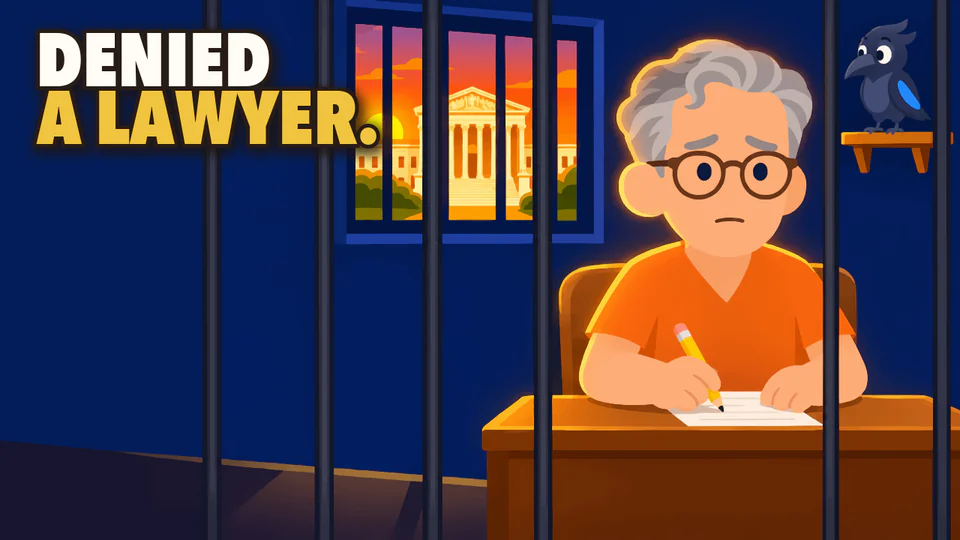
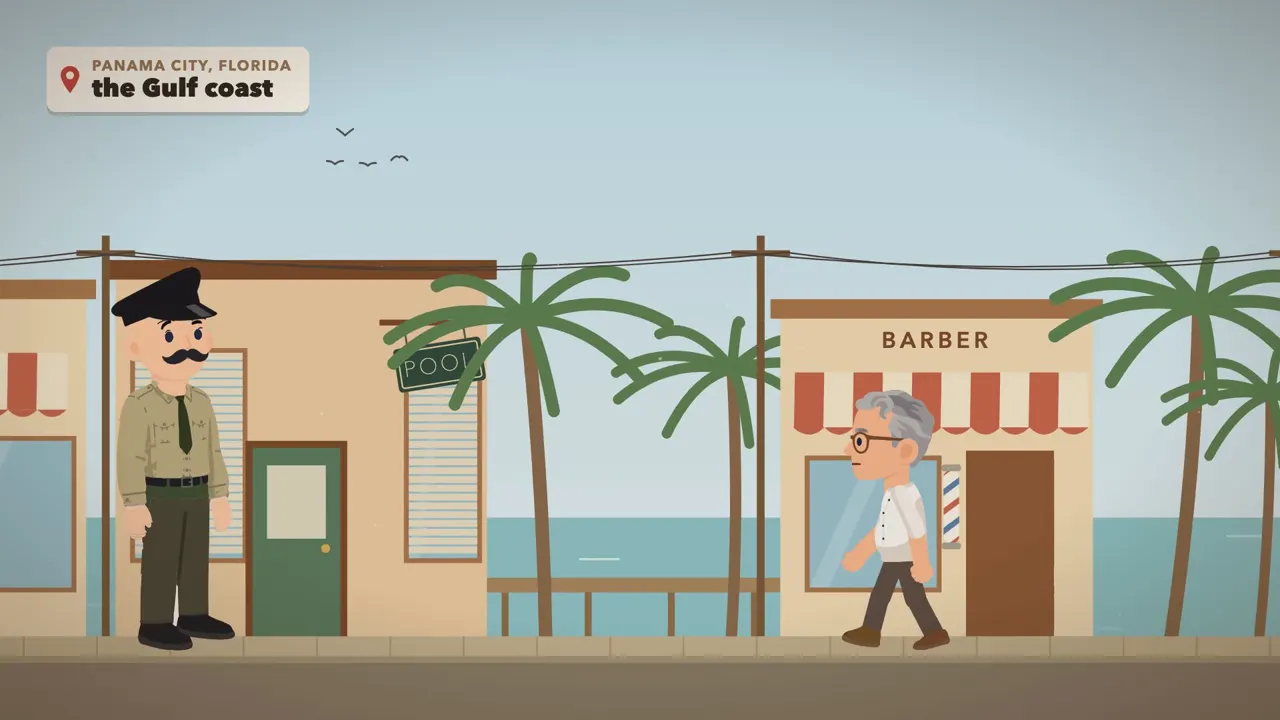
- The charge. Gideon "was charged in a Florida state court with having broken and entered a poolroom with intent to commit a misdemeanor. This offense is a felony under Florida law." (372 U.S. at 336–337.) The National Archives adds that he was arrested in 1961 for allegedly breaking into a pool hall and "stealing money and alcohol"; the opinion itself does not describe what was taken.
- No funds, no lawyer. He appeared "without funds and without a lawyer" and asked the court to appoint counsel. (Id. at 337.)
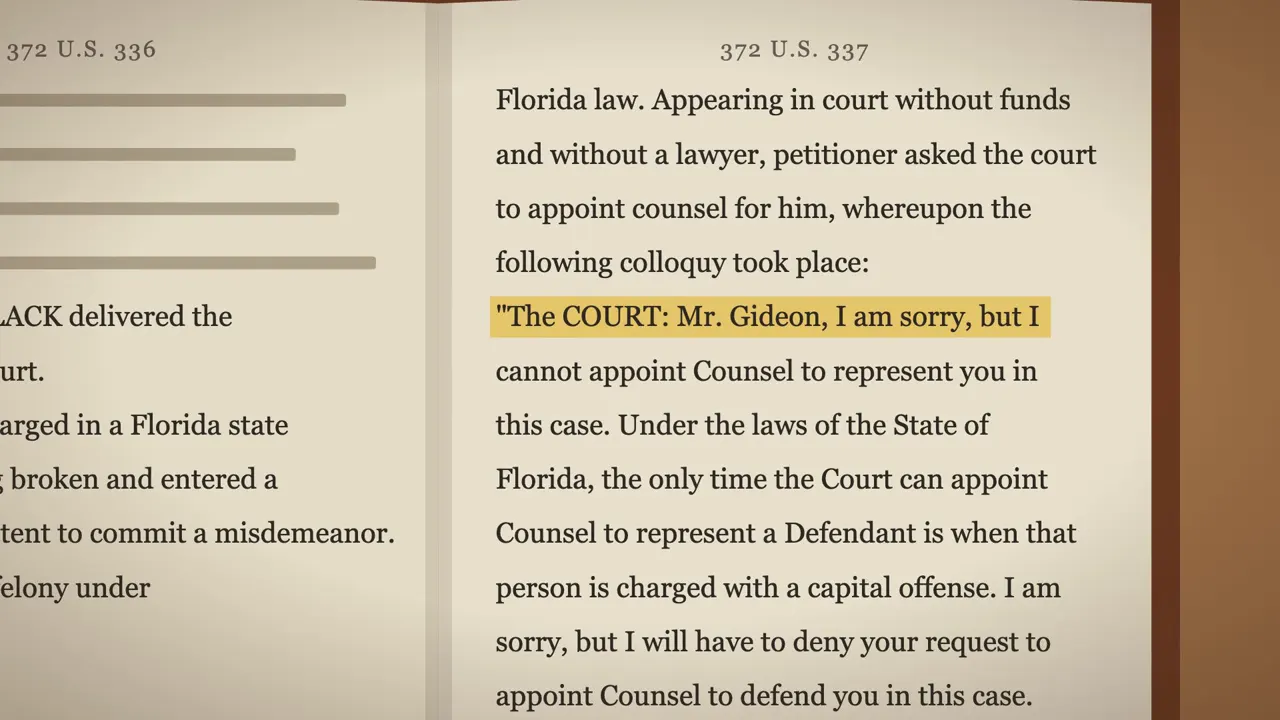
- The refusal. The opinion reproduces the colloquy (id. at 337):
"Mr. Gideon, I am sorry, but I cannot appoint Counsel to represent you in this case. Under the laws of the State of Florida, the only time the Court can appoint Counsel to represent a Defendant is when that person is charged with a capital offense. I am sorry, but I will have to deny your request to appoint Counsel to defend you in this case." — The Court (trial judge), 372 U.S. at 337
"The United States Supreme Court says I am entitled to be represented by Counsel." — Gideon, 372 U.S. at 337
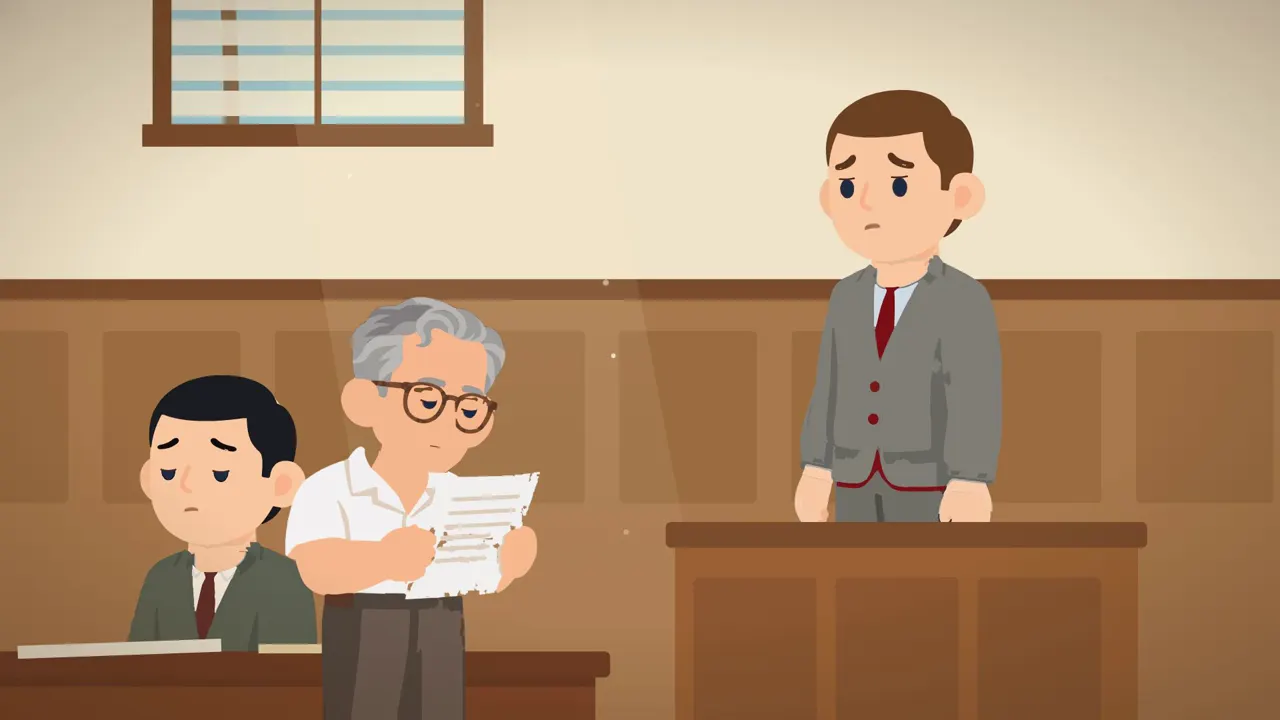
- His defense. "Put to trial before a jury, Gideon conducted his defense about as well as could be expected from a layman." He made an opening statement, cross-examined the State's witnesses, called his own, declined to testify, and made a short argument "emphasizing his innocence to the charge contained in the Information filed in this case." (Id. at 337.)
- Verdict and sentence. "The jury returned a verdict of guilty, and petitioner was sentenced to serve five years in the state prison." (Id. at 337.)
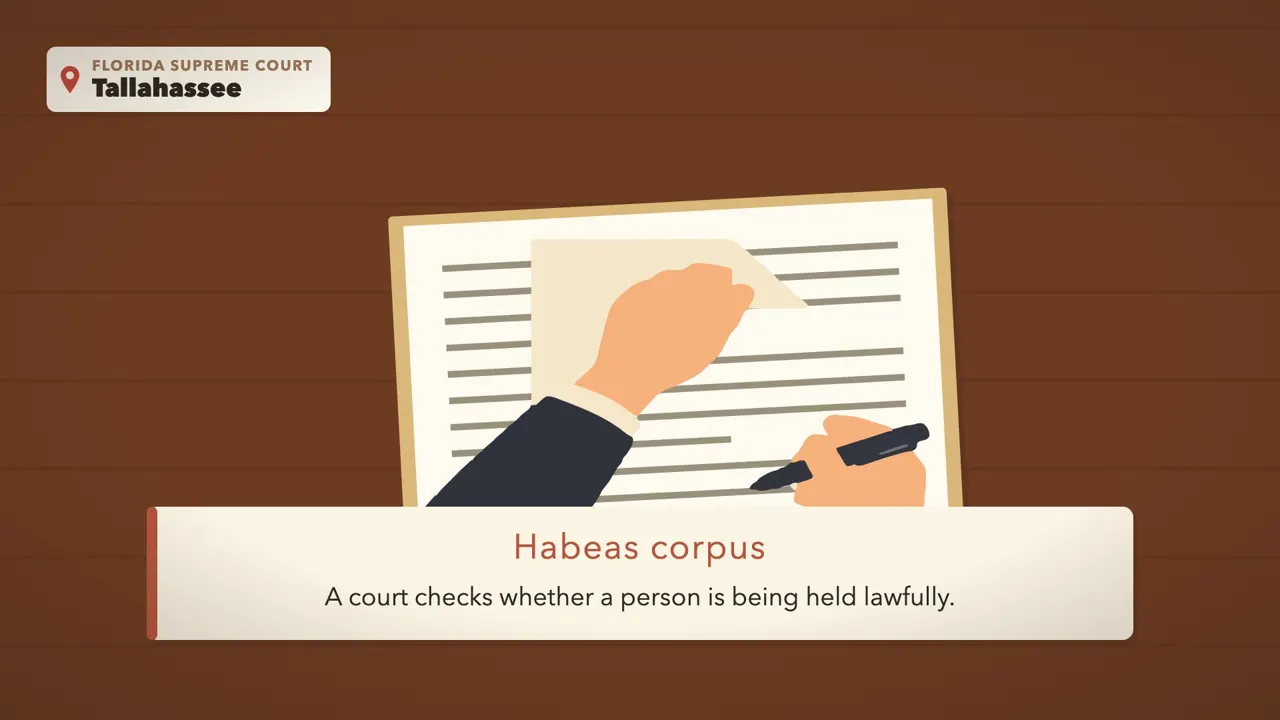
- Habeas corpus. He then filed a habeas corpus petition in the Florida Supreme Court; a footnote records that the petition was "signed and apparently prepared by petitioner himself" and quotes it: "I, Clarence Earl Gideon, claim that I was denied the rights of the 4th, 5th and 14th amendments of the Bill of Rights." (Id. at 337 & n.1.) The Florida court, "upon consideration thereof" but "without an opinion, denied all relief." (Id. at 337.)
- The petition to Washington. The National Archives holds Gideon's petition for a writ of certiorari, dated January 5, 1962, written "in pencil, on lined prison paper," in which he described himself as a "pauper." It describes him as "a poor drifter with an eighth-grade education."
- In forma pauperis. "Since Gideon was proceeding in forma pauperis, we appointed counsel to represent him." (Id. at 338.)
Procedural history
| Stage | Court | What happened | Source |
|---|
| 1961 (arrest; trial year inferred, see note) | Florida state trial court, Panama City | Request for appointed counsel denied; jury verdict of guilty; five years in state prison | 372 U.S. at 337; arrest year: National Archives; Panama City: NPR (Bright, 2013) |
| Before Jan. 5, 1962 | Supreme Court of Florida | Habeas corpus petition denied "without an opinion" (no reported citation was located for this order) | 372 U.S. at 337 |
| Jan. 5, 1962 | Supreme Court of the United States | Handwritten petition for certiorari (NAID 597554) | National Archives |
| 1962 | Supreme Court of the United States | Certiorari granted, 370 U.S. 908; Fortas appointed, 370 U.S. 932; parties asked to brief whether Betts should be reconsidered | 372 U.S. at 335, 338 |
| Jan. 15, 1963 | Supreme Court of the United States | Oral argument (audio on Oyez, two parts) | 372 U.S. at 335; Oyez |
| Mar. 18, 1963 | Supreme Court of the United States | Reversed and remanded, 9–0; Betts overruled | 372 U.S. at 335, 345 |
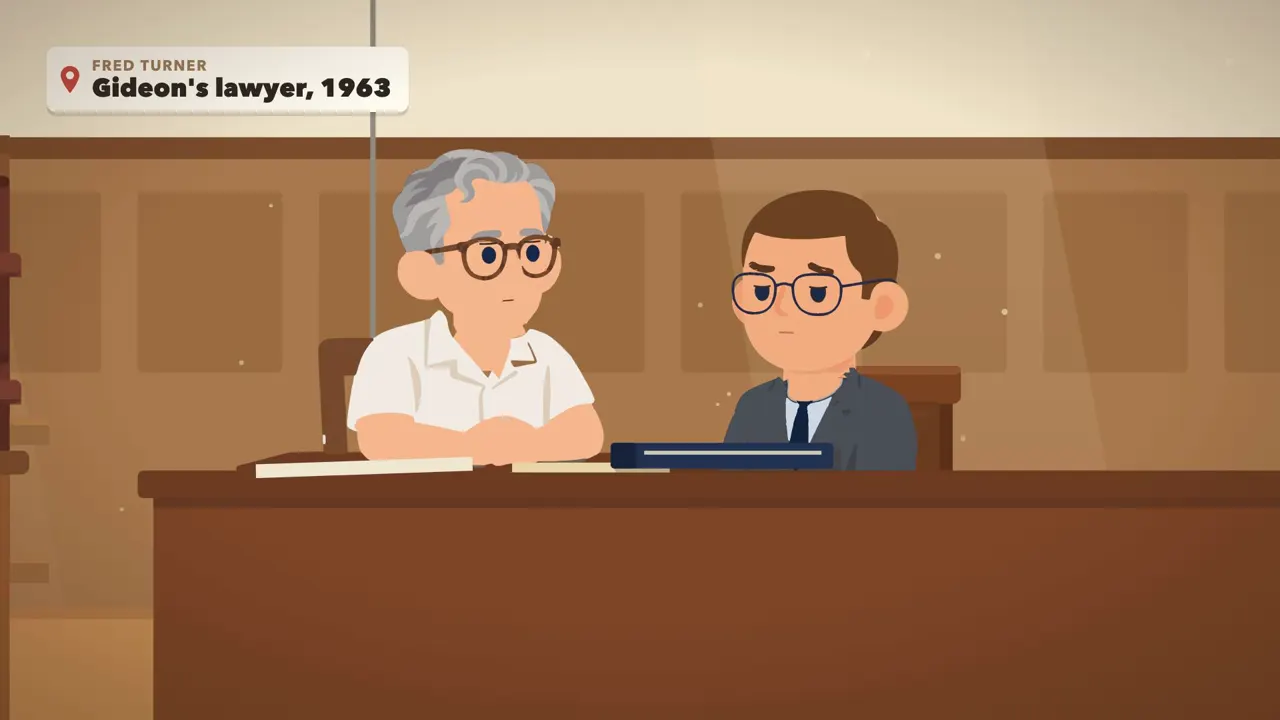
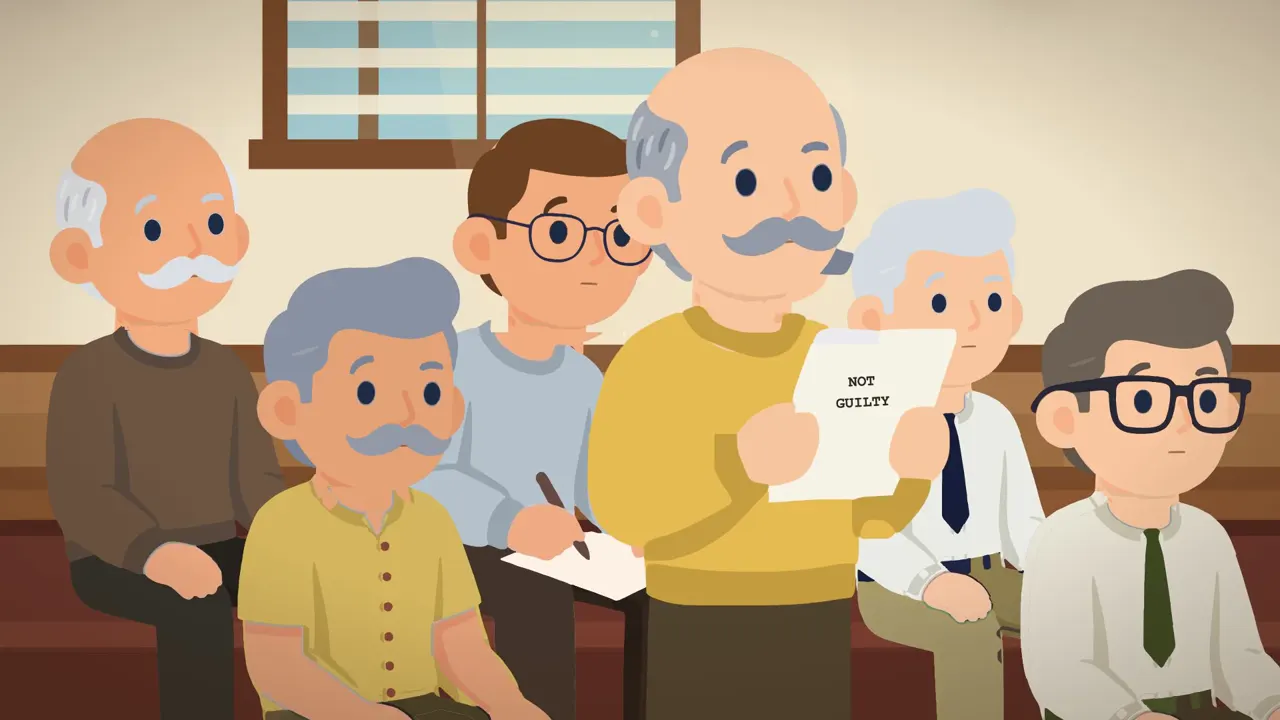
| After remand | Florida trial court, Panama City | Retried with a lawyer, Fred Turner; found not guilty | National Archives; NPR (Bright, 2013) |
Note: the opinion does not date the first trial. The National Archives dates the arrest to 1961, and the certiorari petition, filed after the Florida Supreme Court ruled, is dated January 5, 1962, so the trial and the Florida habeas ruling fall between those dates. The exact dates of the first trial and of the retrial are not stated in any source fetched for this pack, so they are not given here.
The question presented
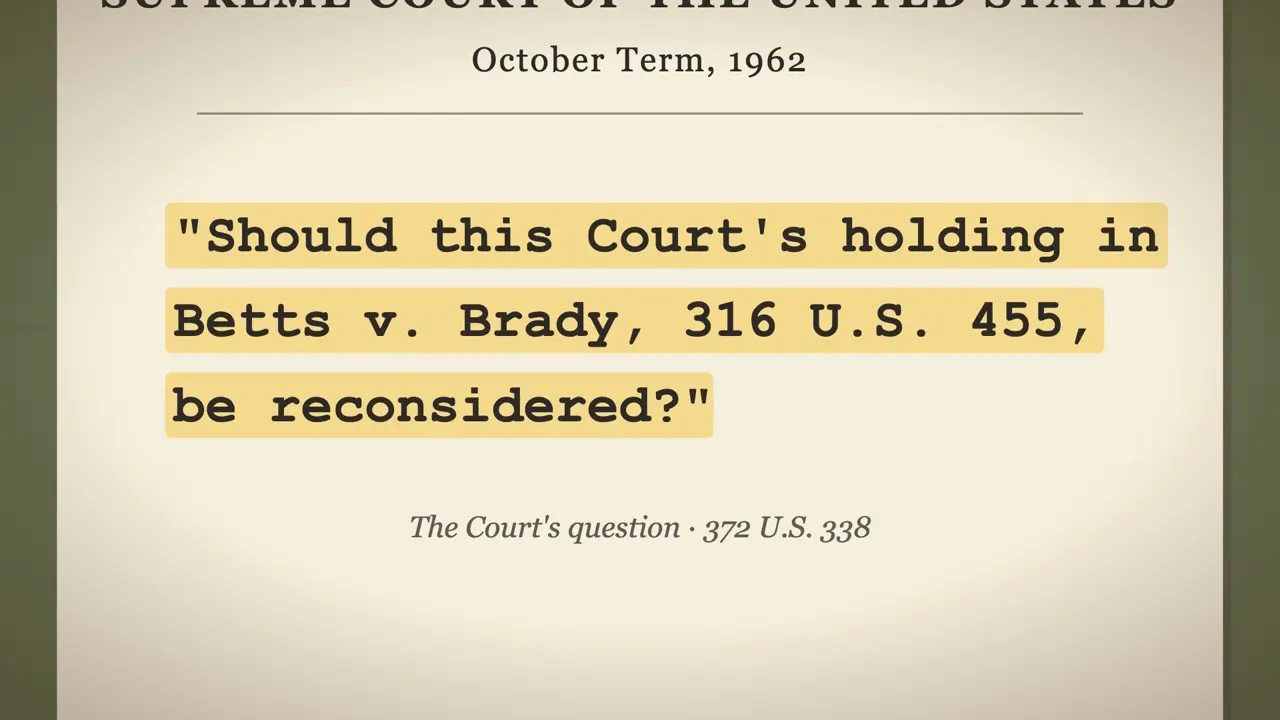
The Court asked both sides to address one question (372 U.S. at 338):
"Should this Court's holding in Betts v. Brady, 316 U. S. 455, be reconsidered?"
Put in doctrinal terms: does the Sixth Amendment's guarantee of the "Assistance of Counsel" (id. at 339) bind the States through the Fourteenth Amendment, so that a State must appoint a lawyer for a defendant in a felony prosecution who cannot afford one?
The holding and the rule
The Court's operative words:
"Upon full reconsideration we conclude that Betts v. Brady should be overruled." — 372 U.S. at 339
"We accept Betts v. Brady's assumption, based as it was on our prior cases, that a provision of the Bill of Rights which is "fundamental and essential to a fair trial" is made obligatory upon the States by the Fourteenth Amendment. We think the Court in Betts was wrong, however, in concluding that the Sixth Amendment's guarantee of counsel is not one of these fundamental rights." — 372 U.S. at 342
"The judgment is reversed and the cause is remanded to the Supreme Court of Florida for further action not inconsistent with this opinion." — 372 U.S. at 345
The rule. The Sixth Amendment right to the assistance of counsel is fundamental and binds the States through the Fourteenth Amendment. A State that tries an indigent defendant for a felony without counsel, absent a valid waiver, violates the Constitution. On waiver, the Court noted that in federal courts counsel must be provided "unless the right is competently and intelligently waived" (id. at 340, citing Johnson v. Zerbst, 304 U.S. 458 (1938)).
The reasoning
Step 1: Betts cannot be distinguished. The facts in Betts were "strikingly like" Gideon's (372 U.S. at 338). Betts had held that due process is "to be tested by an appraisal of the totality of facts in a given case" (id. at 339, quoting 316 U.S. at 462). Because the cases were "so nearly indistinguishable," Betts "if left standing would require us to reject Gideon's claim" (id. at 339). The only route to Gideon was through Betts.
Step 2: Betts asked the right question but answered it wrongly. Betts had accepted that a Bill of Rights guarantee that is "fundamental and essential to a fair trial" binds the States through the Fourteenth Amendment; it then concluded that "appointment of counsel is not a fundamental right, essential to a fair trial" (id. at 340, quoting 316 U.S. at 471). Gideon kept the test and reversed the answer (id. at 342).
Step 3: Precedent before Betts already called counsel fundamental. Ten years before Betts, Powell v. Alabama had "unequivocally declared that "the right to the aid of counsel is of this fundamental character."" (id. at 342–343, quoting 287 U.S. at 68). Grosjean v. American Press Co. (1936) and Johnson v. Zerbst (1938) repeated the point (id. at 343). So:
"the Court in Betts v. Brady made an abrupt break with its own well-considered precedents." — 372 U.S. at 344
Step 4: Reason and experience. The central passage:
"in our adversary system of criminal justice, any person haled into court, who is too poor to hire a lawyer, cannot be assured a fair trial unless counsel is provided for him. This seems to us to be an obvious truth." — 372 U.S. at 344
The Court pointed to how governments and defendants behave:
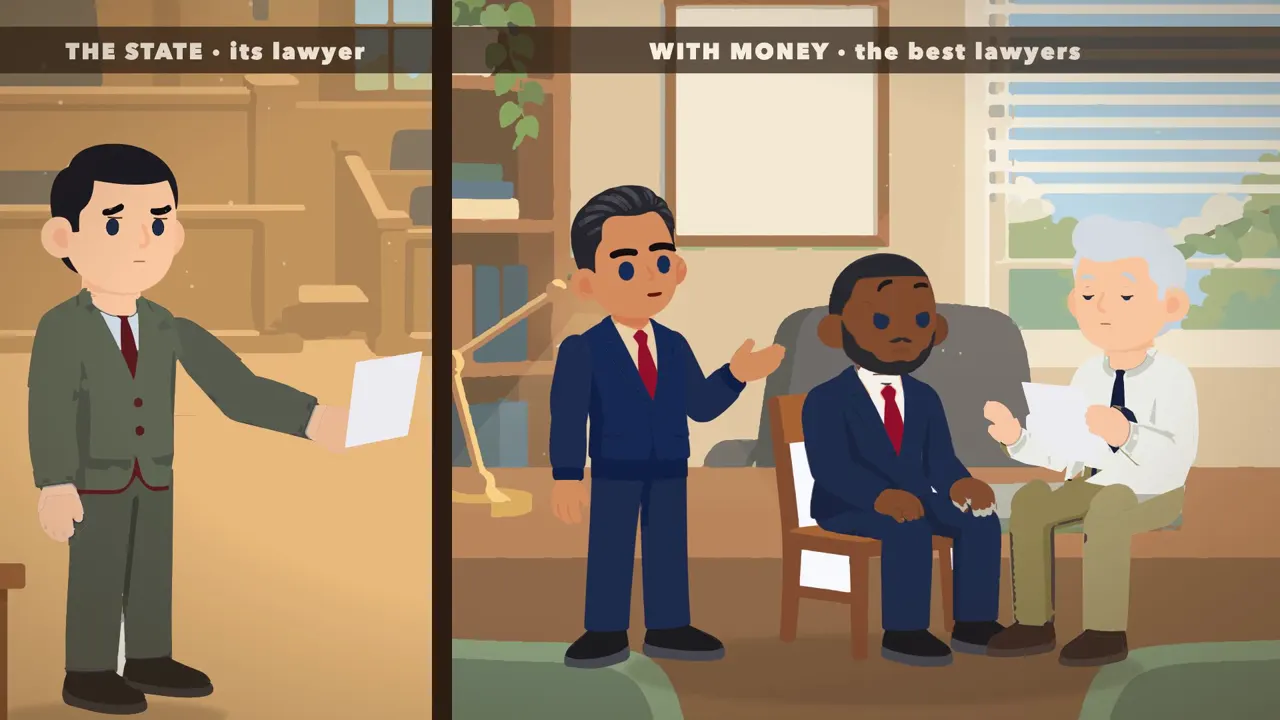
"That government hires lawyers to prosecute and defendants who have the money hire lawyers to defend are the strongest indications of the widespread belief that lawyers in criminal courts are necessities, not luxuries." — 372 U.S. at 344
Step 5: Equality before the law. Fair trials are meant to take place "before impartial tribunals in which every defendant stands equal before the law" (id. at 344):
"This noble ideal cannot be realized if the poor man charged with crime has to face his accusers without a lawyer to assist him." — 372 U.S. at 344
Step 6: Powell's description of the layman. The Court closed with Justice Sutherland's words from Powell (id. at 344–345, quoting 287 U.S. at 68–69):
"He requires the guiding hand of counsel at every step in the proceedings against him. Without it, though he be not guilty, he faces the danger of conviction because he does not know how to establish his innocence." — 372 U.S. at 345
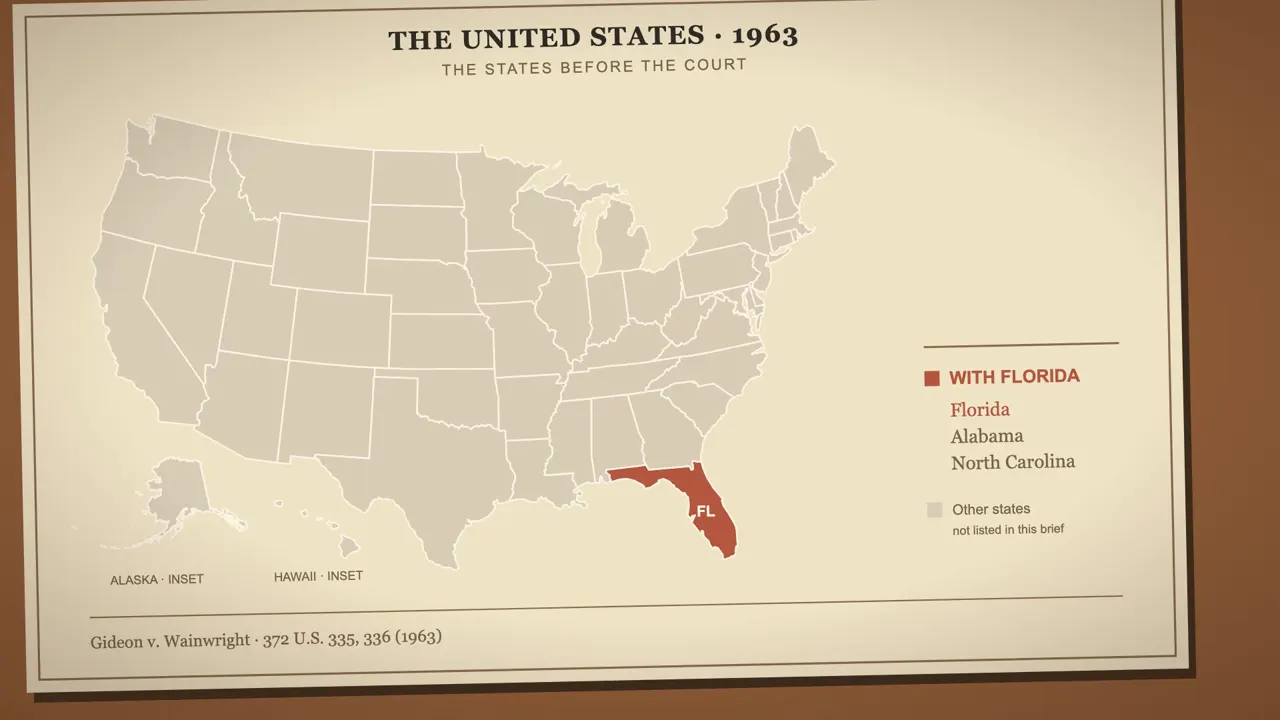
Step 7: The States themselves. "Florida, supported by two other States, has asked that Betts v. Brady be left intact." (Id. at 345.) On the other side:
"Twenty-two States, as friends of the Court, argue that Betts was "an anachronism when handed down" and that it should now be overruled. We agree." — 372 U.S. at 345
The 22-State brief was filed by Edward J. McCormack, Jr., Attorney General of Massachusetts, with the attorneys general of the other signing States and Commonwealths, including Walter F. Mondale of Minnesota (id. at 336). Alabama argued, and North Carolina joined Alabama's brief, urging affirmance (id. at 335–336).
At oral argument (Oyez transcript, unofficial). Fortas told the Court that "we are not, and we cannot ... proceed on the assumption that there is any such thing as a fair criminal trial where the defendant is not represented by counsel" (Part 1, about 15:54). Florida's Bruce Jacob answered that "The main point, it seems to me, in the argument for the petitioner is that it's impossible to get a fair trial without counsel. That seems to be the main point that they rely upon. This, of course, is not true" (Part 2, about 70:30). Oyez transcripts are machine-aligned transcriptions, not official court records; listen to the audio to confirm wording.
Concurrences and dissents
There was no dissent. Three justices wrote separately.
Justice Douglas joined the Court's opinion but added a history of the view that the Fourteenth Amendment applies the Bill of Rights to the States:
"While I join the opinion of the Court, a brief historical résumé of the relation between the Bill of Rights and the first section of the Fourteenth Amendment seems pertinent." — 372 U.S. at 345 (Douglas, J.)
He rejected the idea that rights applied to the States are weaker versions: "rights protected against state invasion by the Due Process Clause of the Fourteenth Amendment are not watered-down versions of what the Bill of Rights guarantees." (Id. at 347.)
Justice Clark, concurring in the result, saw no constitutional line between capital and noncapital cases:
"The Court's decision today, then, does no more than erase a distinction which has no basis in logic and an increasingly eroded basis in authority." — 372 U.S. at 348 (Clark, J.)
He concluded "that the Constitution makes no distinction between capital and noncapital cases." (Id. at 349.)
Justice Harlan, concurring, agreed Betts had to go but defended its place in history:
"I agree that Betts v. Brady should be overruled, but consider it entitled to a more respectful burial than has been accorded, at least on the part of those of us who were not on the Court when that case was decided." — 372 U.S. at 349 (Harlan, J.)
He wrote that "In truth the Betts v. Brady rule is no longer a reality" (id. at 351), and stressed that he did not read the Court as embracing "the concept that the Fourteenth Amendment "incorporates" the Sixth Amendment as such." (Id. at 352.)
The dissent that came first. In Betts (1942), Justice Black, joined by Justices Douglas and Murphy, had dissented:
"A practice cannot be reconciled with "common and fundamental ideas of fairness and right," which subjects innocent men to increased dangers of conviction merely because of their poverty." — 316 U.S. at 476 (Black, J., dissenting)
"Any other practice seems to me to defeat the promise of our democratic society to provide equal justice under the law." — 316 U.S. at 477 (Black, J., dissenting)
Doctrine map
Area of law: constitutional criminal procedure; the Sixth Amendment right to counsel; incorporation of the Bill of Rights against the States through the Fourteenth Amendment.
Key tests
| Question | Test | Source |
|---|
| Does a Bill of Rights guarantee bind the States? | Whether it is "fundamental and essential to a fair trial" | 372 U.S. at 342 (accepting Betts's premise) |
| When must a State appoint counsel at trial? | Felony prosecution (Gideon); any offense that actually leads to imprisonment (Argersinger, Scott); including a suspended sentence (Shelton) | Cases below |
| Can the right be given up? | Only by a waiver made competently and intelligently | 372 U.S. at 340; 304 U.S. at 464–465 |
| Was counsel effective? | Deficient performance plus prejudice | 466 U.S. at 687 |
How Gideon fits
| Case | Citation | What it held | Relation to Gideon |
|---|
| Powell v. Alabama | 287 U.S. 45 (1932) | In a capital case, where the defendant is unable to employ counsel and is incapable of an adequate defense, the court must assign counsel as "a necessary requisite of due process of law" (at 71) | Gideon's main foundation (372 U.S. at 342–345) |
| Johnson v. Zerbst | 304 U.S. 458 (1938) | In federal court the Sixth Amendment requires counsel unless the right is intelligently waived (at 462–465) | Supplies the federal rule Gideon extends to the States (372 U.S. at 340) |
| Betts v. Brady | 316 U.S. 455 (1942) | Appointment of counsel not required in every state case; "totality of facts" (at 462, 471–473) | Overruled by Gideon |
| Douglas v. California | 372 U.S. 353 (1963), decided the same day as Gideon | Deciding an indigent's one appeal as of right without counsel violates the Fourteenth Amendment (syllabus at 353) | Companion right to counsel on first appeal |
| Miranda v. Arizona | 384 U.S. 436 (1966) | Warnings before custodial interrogation, including that "if he cannot afford an attorney one will be appointed for him prior to any questioning if he so desires" (at 479) | Extends access to counsel to police questioning |
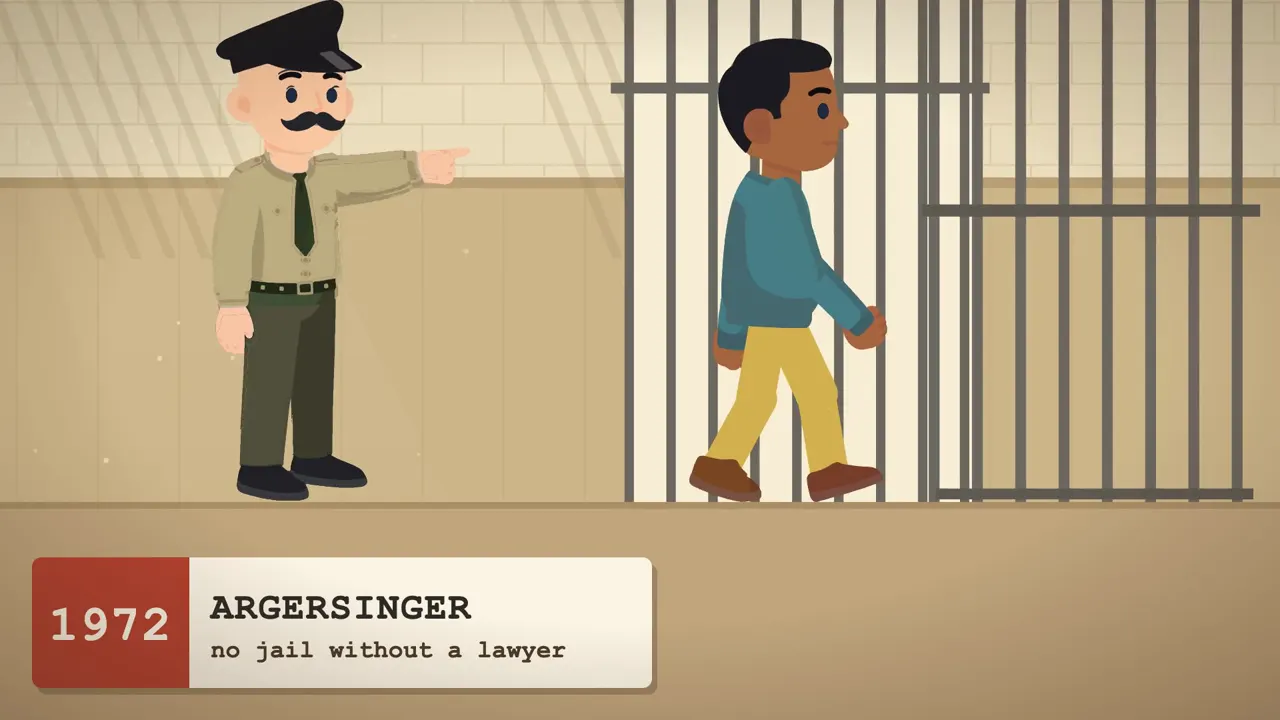
| Argersinger v. Hamlin | 407 U.S. 25 (1972) | No imprisonment for any offense, petty, misdemeanor or felony, without counsel absent a knowing and intelligent waiver (at 37) | Extends Gideon to misdemeanors that lead to jail |
| Scott v. Illinois | 440 U.S. 367 (1979) | No right to appointed counsel where imprisonment is authorized but not imposed; "actual imprisonment" is the line (at 373–374) | Limits the Argersinger extension |
| Strickland v. Washington | 466 U.S. 668 (1984) | Two-part test for ineffective assistance (at 687) | Gives content to the right Gideon guarantees |
| Alabama v. Shelton | 535 U.S. 654 (2002) | A suspended sentence that may lead to jail may not be imposed without counsel (at 658) | Applies Argersinger/Scott to suspended sentences |
What happened next
- The retrial. Gideon "went back to Panama City. He was tried again, but this time he had a lawyer, Fred Turner. And at the end of that trial, he was found not guilty." (Stephen Bright on NPR's Talk of the Nation, March 19, 2013.) The National Archives confirms: "In the second trial, Gideon was found not guilty." The acquittal is a jury verdict that the State did not prove its case; it is not a finding of innocence, and no court has made one.
- Public defense. According to the National Archives, after the decision "many states and counties needed to establish a system of public defenders." Bright said on NPR that "Florida right after Gideon set up public defender offices in each of its judicial circuits." (Bright's opinion, given in an interview.)
- The doctrine grew. Argersinger (1972) took the right to any case that ends in jail; Scott (1979) set actual imprisonment as the line; Strickland (1984) required effective help; Shelton (2002) covered suspended sentences. Each builds on Gideon; Argersinger's syllabus cites it as the source of the right (407 U.S. at 25). See the Doctrine map.
- The people. Abe Fortas later served on the Supreme Court (Oyez lists him as an Associate Justice appointed by President Lyndon B. Johnson; the National Archives calls him a "future Supreme Court justice"). Gideon's petition is in the National Archives (Record Group 267, Records of the Supreme Court of the United States, Appellate Jurisdiction Case File Gideon v. Wainright [sic]); the Archives says it has been displayed in its Rubenstein Gallery.
Common myths vs the record
| Myth | Record |
|---|
| Gideon argued his own case in the Supreme Court. | Abe Fortas, "by appointment of the Court," argued for Gideon (372 U.S. at 335). |
| The decision set Gideon free. | The Court reversed and remanded "for further action not inconsistent with this opinion" (id. at 345). He was retried; the second jury acquitted him (National Archives). |
| The jury found Gideon innocent. | A not-guilty verdict means the State failed to prove its case. No court declared him innocent. |
| Gideon guarantees a free lawyer in every case. | The Sixth Amendment covers "all criminal prosecutions" (id. at 339). Gideon was a felony case; later cases set the line for lesser offenses at actual or suspended imprisonment (Scott, 440 U.S. at 373–374; Shelton, 535 U.S. at 658). Civil cases are a separate question (Betts noted the civil-case argument, 316 U.S. at 473). |
| The States opposed Gideon. | Florida, Alabama and North Carolina defended Betts; 22 States and Commonwealths urged the Court to overrule it (372 U.S. at 335–336, 345). |
| Betts was a narrow special-circumstances rule nobody followed. | Betts was the law for over 20 years. Harlan, J., wrote that by 1963 the rule had been eroded in practice ("no longer a reality," 372 U.S. at 351), but it was formally binding until Gideon. |
Study questions
- What exactly did the trial judge tell Gideon, and what reason did he give? (372 U.S. at 337)
- Why did the Court say Betts "if left standing would require us to reject Gideon's claim"? (Id. at 339)
- Name the three steps of Gideon's reasoning that rely on precedent decided before 1942.
- What did Betts mean by an "appraisal of the totality of facts in a given case"? What are the costs and benefits of such a test compared with a bright-line rule?
- Why does the Court treat the fact that governments hire prosecutors, and wealthy defendants hire lawyers, as evidence about what fairness requires? (Id. at 344)
- Justice Clark said the decision "does no more than erase a distinction." Which distinction, and why did he think it had "no basis in logic"? (Id. at 348–349)
- Justice Harlan wanted "a more respectful burial" for Betts. What did he think Betts had actually decided, and why does it matter how a court describes the precedent it overrules? (Id. at 349–351)
- Why might 22 States ask the Court to impose a duty on themselves? What does that suggest about the role of amicus briefs?
- How do Argersinger, Scott and Shelton draw the line between cases that require counsel and cases that do not? Is "actual imprisonment" a principled line?
- Gideon was acquitted on retrial. Does the acquittal prove the Court was right? What would it mean if he had been convicted again?
Hypotheticals
- A. A State charges Dana with a misdemeanor punishable by up to six months in jail. The judge, planning only to fine her, refuses to appoint counsel. At sentencing, the judge changes course and orders 10 days in jail. Using Argersinger, Scott and Shelton, can the jail term stand?
- B. Sam, charged with a felony, tells the judge he wants to represent himself. The judge accepts without asking about his education, experience or understanding of the charge. Sam is convicted. Using Gideon (372 U.S. at 340) and Johnson v. Zerbst (304 U.S. at 464–465), what must the record show for the waiver to be valid?