Verified Docket
Case notes
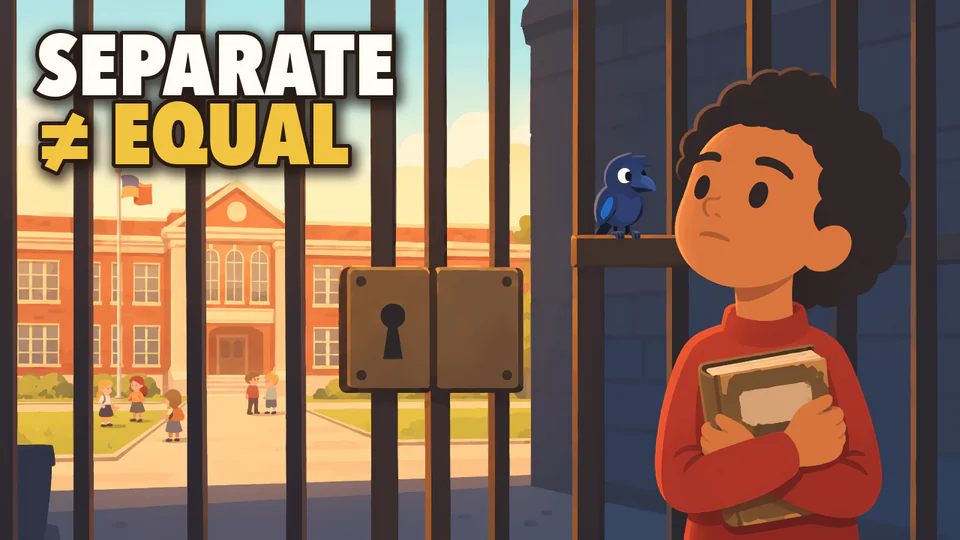
Study notes for Brown v. Board of Education: the case card, facts, procedure, holding, reasoning, separate opinions, what came next and study questions. Sources are listed at the end of the page.
Case card
| Field | Record |
|---|
| Full name (Brown I) | Brown et al. v. Board of Education of Topeka et al., together with Briggs et al. v. Elliott et al.; Davis et al. v. County School Board of Prince Edward County, Virginia, et al.; and Gebhart et al. v. Belton et al. |
| Citation (Brown I) | Brown v. Board of Education, 347 U.S. 483, 74 S. Ct. 686, 98 L. Ed. 873 (1954) |
| Companion case | Bolling et al. v. Sharpe et al., 347 U.S. 497 (1954) (D.C.; Fifth Amendment), 74 S. Ct. 693 |
| Implementation decision (Brown II) | Brown v. Board of Education, 349 U.S. 294, 75 S. Ct. 753, 99 L. Ed. 1083 (1955) |
| Reargument order | 345 U.S. 972 (June 8, 1953) |
| Court | Supreme Court of the United States |
| Opinion | Chief Justice Earl Warren, for a unanimous Court, in Brown I, Bolling and Brown II |
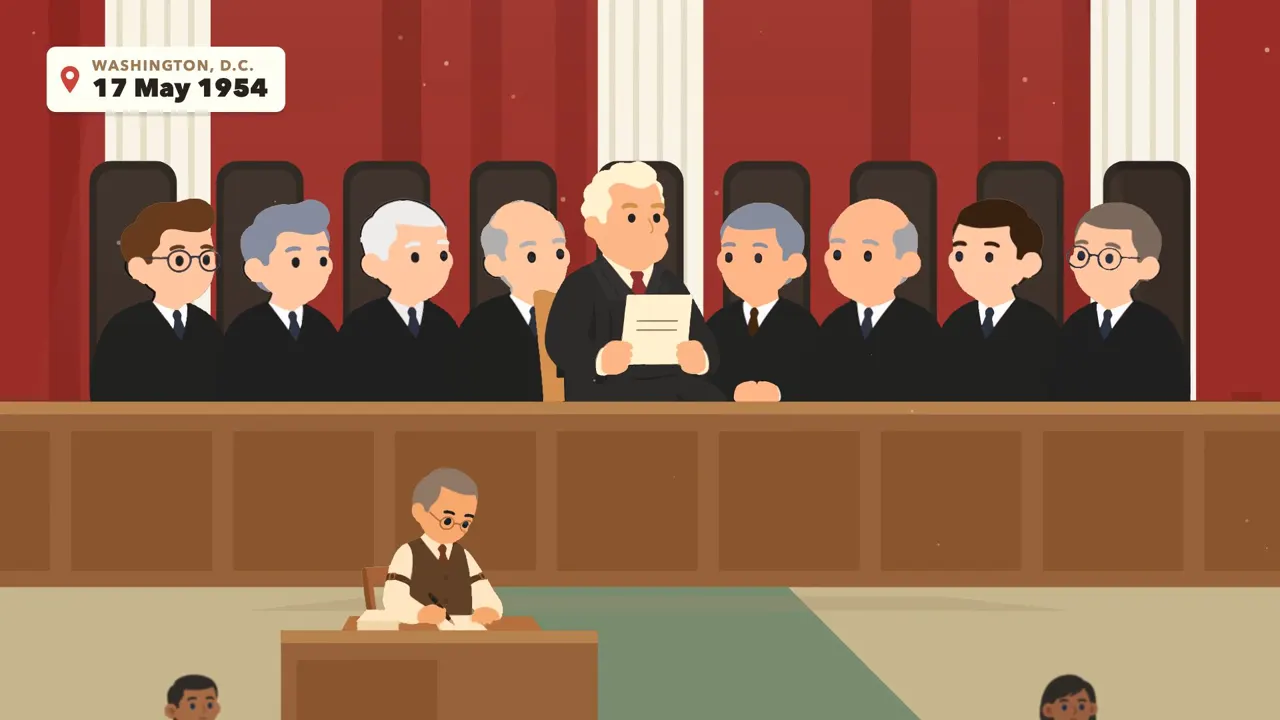
| Bench (May 17, 1954) | Warren, C.J.; Black, Reed, Frankfurter, Douglas, Jackson, Burton, Clark, Minton, JJ. |
| Filed | Brown: February 1951 (D. Kan.). Briggs: first filed May 16, 1950, re-filed December 22, 1950 (E.D.S.C.) |
| Argued | December 9–11, 1952 (Brown Dec. 9; Briggs Dec. 9–10; Davis Dec. 10; Bolling Dec. 10–11; Gebhart Dec. 11) |
| Reargued | December 7–9, 1953 (Briggs and Davis Dec. 7–8; Brown Dec. 8; Bolling Dec. 8–9; Gebhart Dec. 9) |
| Decided | Brown I and Bolling: May 17, 1954. Brown II: reargued on relief April 11–14, 1955; announced May 31, 1955 |
| Docket numbers (Supreme Court) | October Term 1952: the reargument order lists Nos. 8, 101, 191, 413 and 448. October Term 1953: No. 1 (Brown), No. 2 (Briggs), No. 4 (Davis), No. 10 (Gebhart), No. 8 (Bolling). October Term 1954 (Brown II): Nos. 1–5 |
| Docket numbers (trial courts) | Brown: Civ. No. T-316 (D. Kan.). Briggs: Civ. A. No. 2657 (E.D.S.C.). Davis: Civ. A. No. 1333 (E.D. Va.). |
| Vote | 9–0 in Brown I, Bolling and Brown II |
| Outcome in one line | State-imposed racial segregation of public schools violates the Fourteenth Amendment's Equal Protection Clause (and, in D.C., the Fifth Amendment's Due Process Clause); a year later the Court sent the cases back to the trial courts to admit the children "with all deliberate speed". |
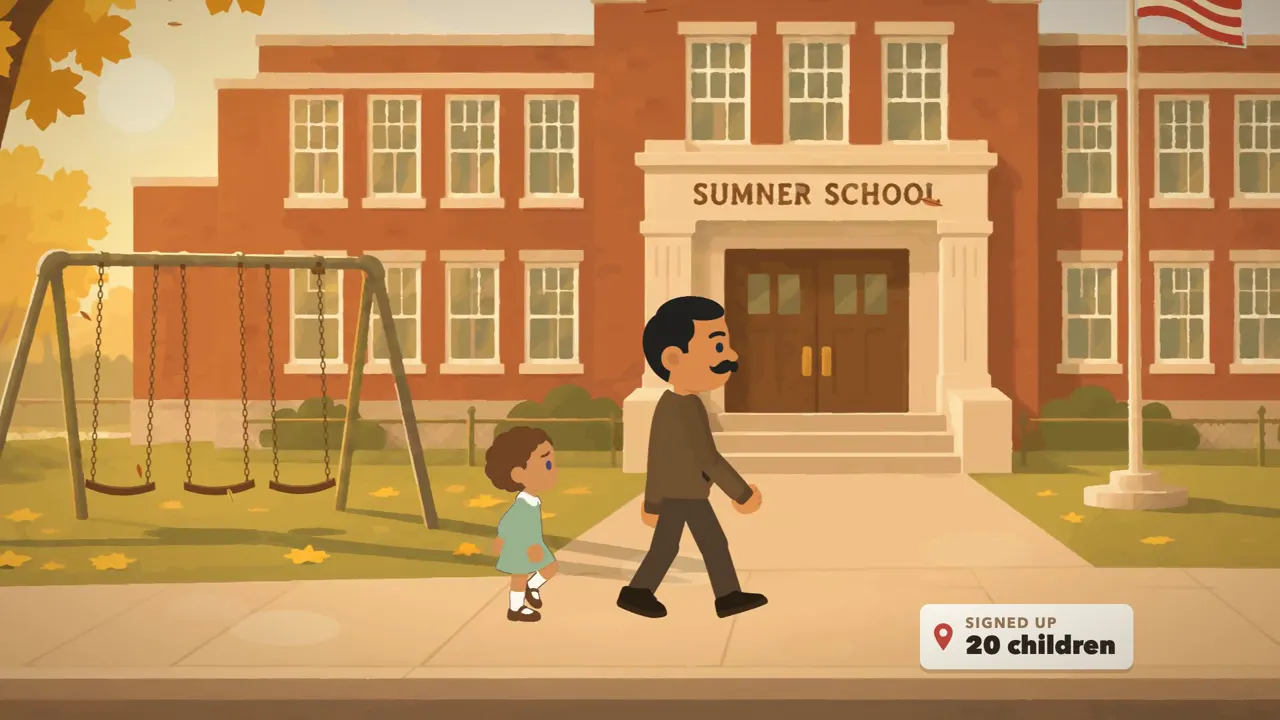
The story in 150 words
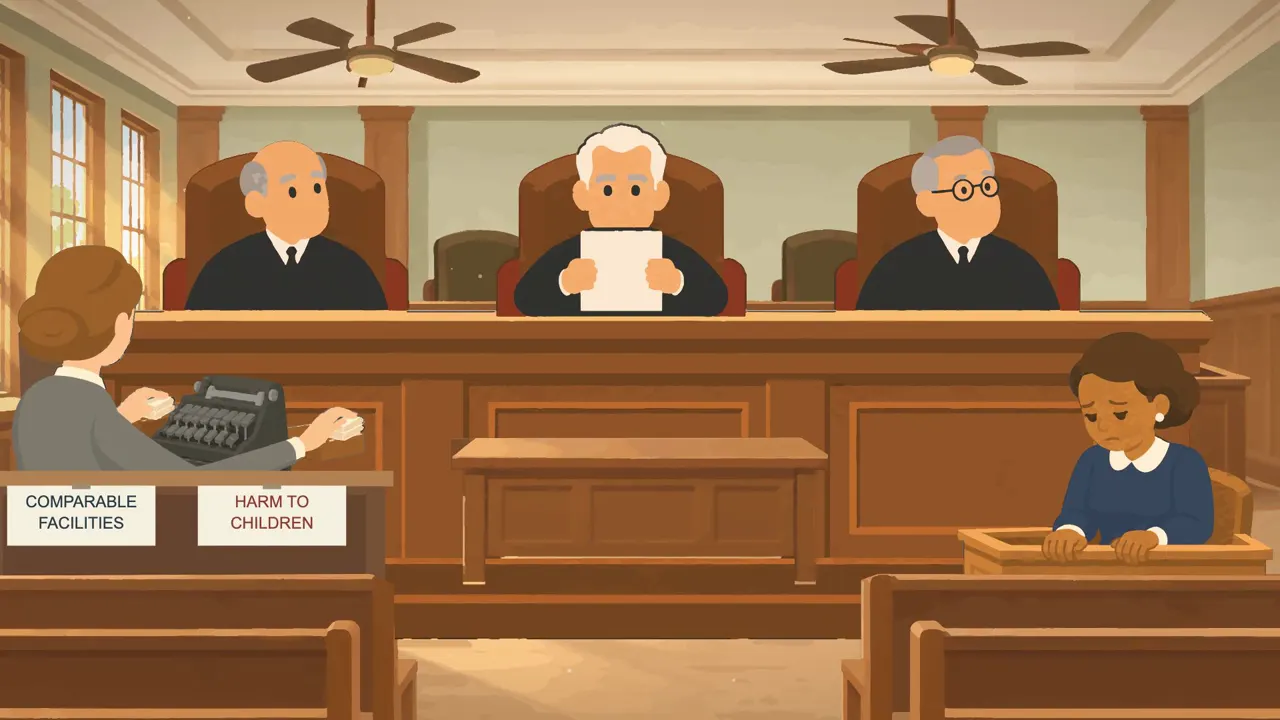
In the early 1950s, Black families in Kansas, South Carolina, Virginia, Delaware and Washington, D.C. went to court over laws that sent their children to separate schools. In Topeka, the NAACP branch organized thirteen parents for twenty children; Oliver Brown's name came first. The Topeka trial court found the Black and white schools comparable and also found that segregation harmed Black children, yet ruled against the families because the Supreme Court's 1896 decision in Plessy v. Ferguson still stood. The Supreme Court heard the five cases together in 1952, ordered a second argument, and on May 17, 1954, under the new Chief Justice, Earl Warren, ruled unanimously that "separate educational facilities are inherently unequal." It left the remedy for later. In 1955 it told lower courts to proceed "with all deliberate speed". Years of delay and resistance followed.
Facts (as the courts found them)
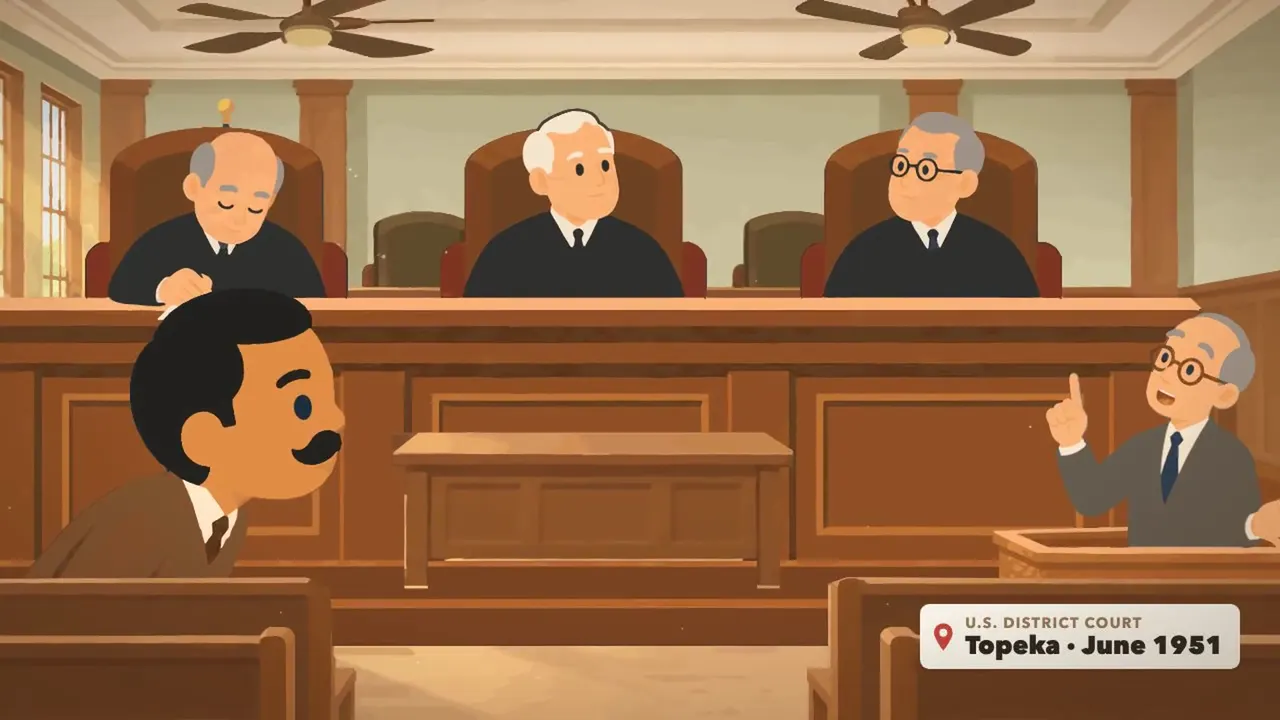
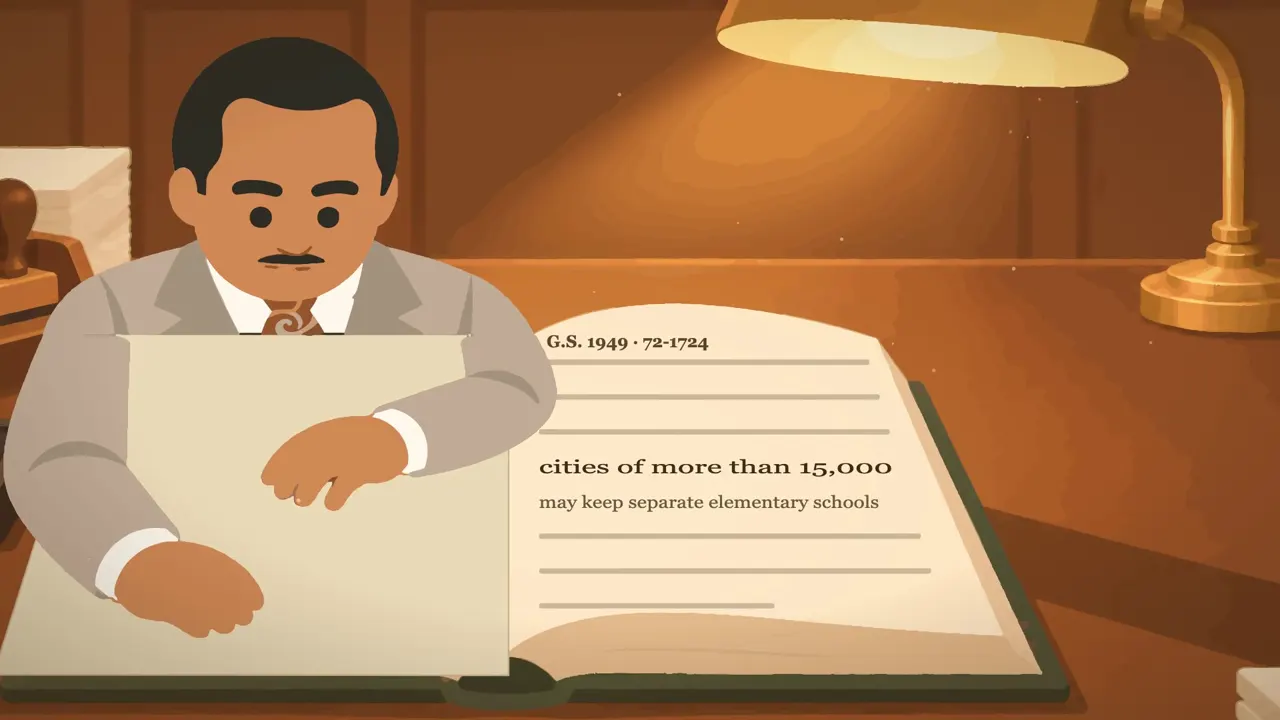
Kansas (Brown). A Kansas statute "permits, but does not require, cities of more than 15,000 population to maintain separate school facilities for Negro and white students" (347 U.S. at 486 n.1). Topeka used that power for its elementary schools; "Other public schools in the community, however, are operated on a nonsegregated basis" (id.). The trial court found that Topeka "has established and maintains a segregated system of schools for the first six grades", with "eighteen schools for white students and four schools for colored students" (98 F. Supp. 797, 797). It found the two sets of schools "comparable" in "physical facilities, the curricula, courses of study, qualification of and quality of teachers" (id. at 798), and noted that the district "transports colored children to and from school free of charge" (id.).
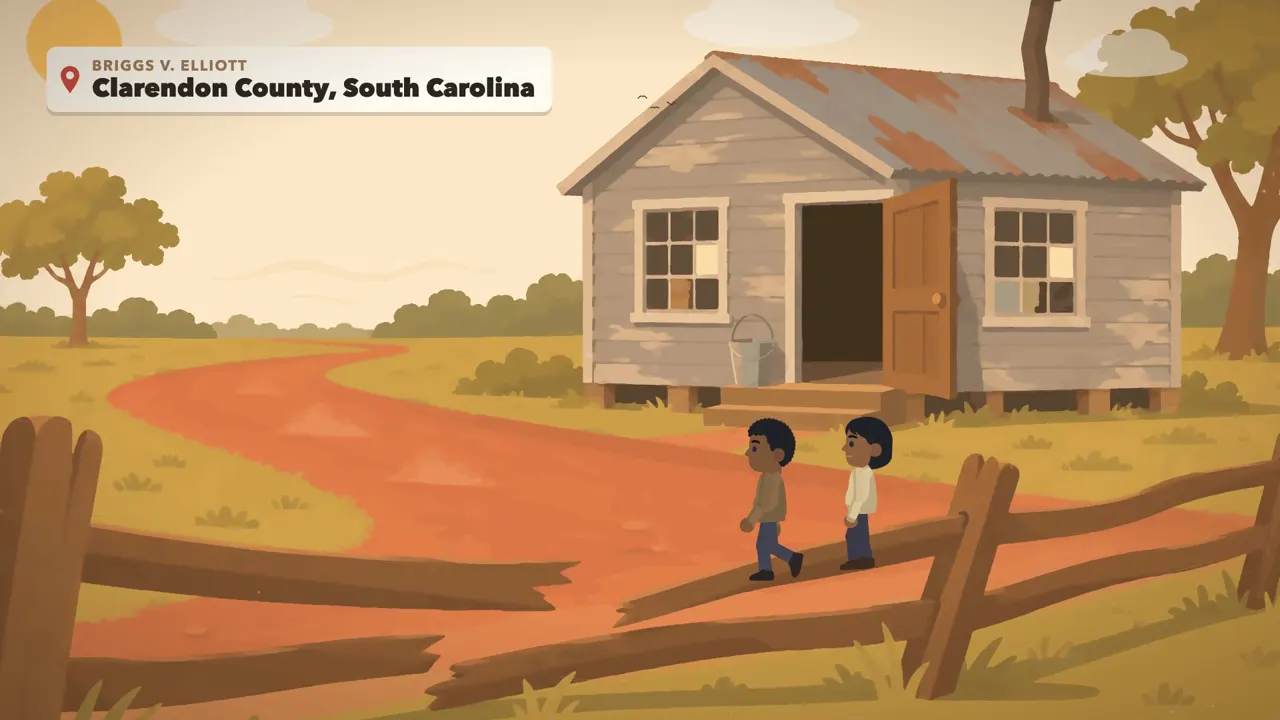
South Carolina (Briggs). The plaintiffs were Black children in Clarendon County, where the state constitution and code "require the segregation of Negroes and whites in public schools" (347 U.S. at 486 n.1). The trial court "found that the Negro schools were inferior to the white schools and ordered the defendants to begin immediately to equalize the facilities" (id. at 486–487 n.1).
Virginia (Davis). The plaintiffs were Black high-school students in Prince Edward County. The trial court "found the Negro school inferior in physical plant, curricula, and transportation" (347 U.S. at 487 n.1).
Delaware (Gebhart). The plaintiffs were Black elementary and high-school children in New Castle County. The Chancellor found the Black schools inferior "with respect to teacher training, pupil-teacher ratio, extracurricular activities, physical plant, and time and distance involved in travel" (347 U.S. at 487–488 n.1). The Belton plaintiffs "have been refused admission to the Claymont High School" (32 Del. Ch. 343, 345).
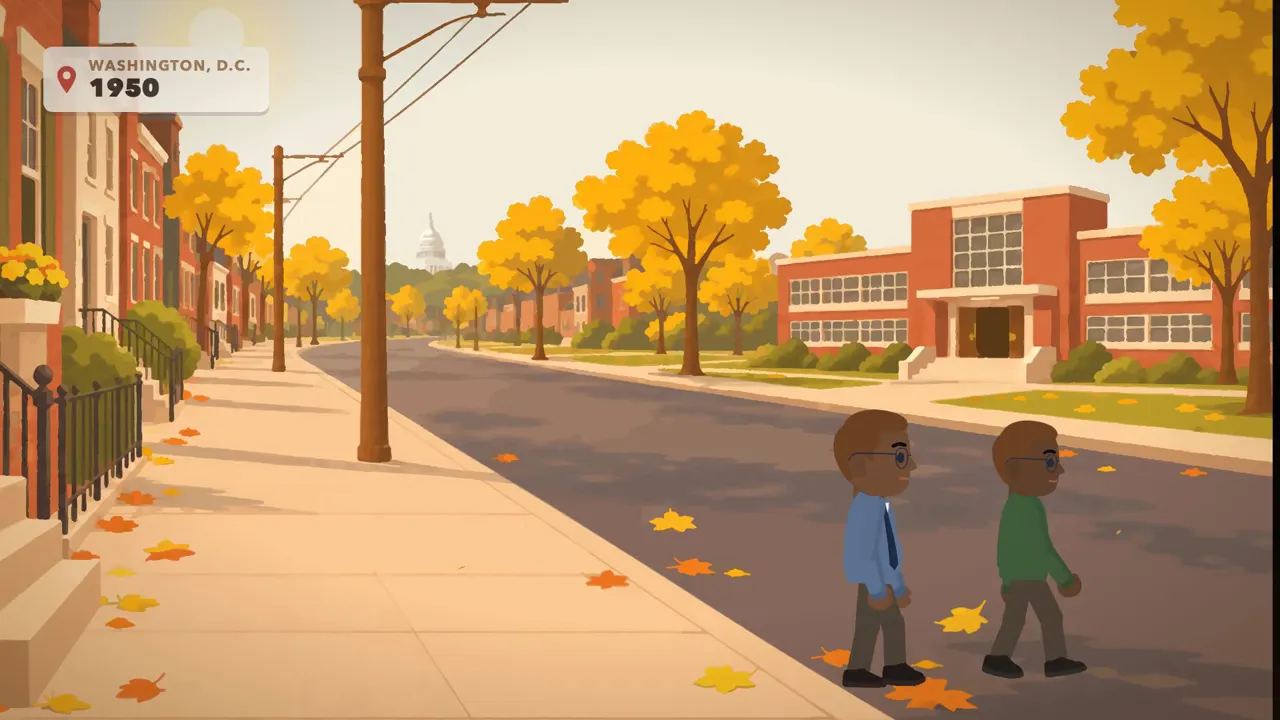
District of Columbia (Bolling). The petitioners, Black children, "were refused admission to a public school attended by white children solely because of their race" (347 U.S. at 498). The National Park Service identifies the school as John Philip Sousa Junior High (see SOURCES.md).
Procedural history
| Court | What it held | Citation |
|---|
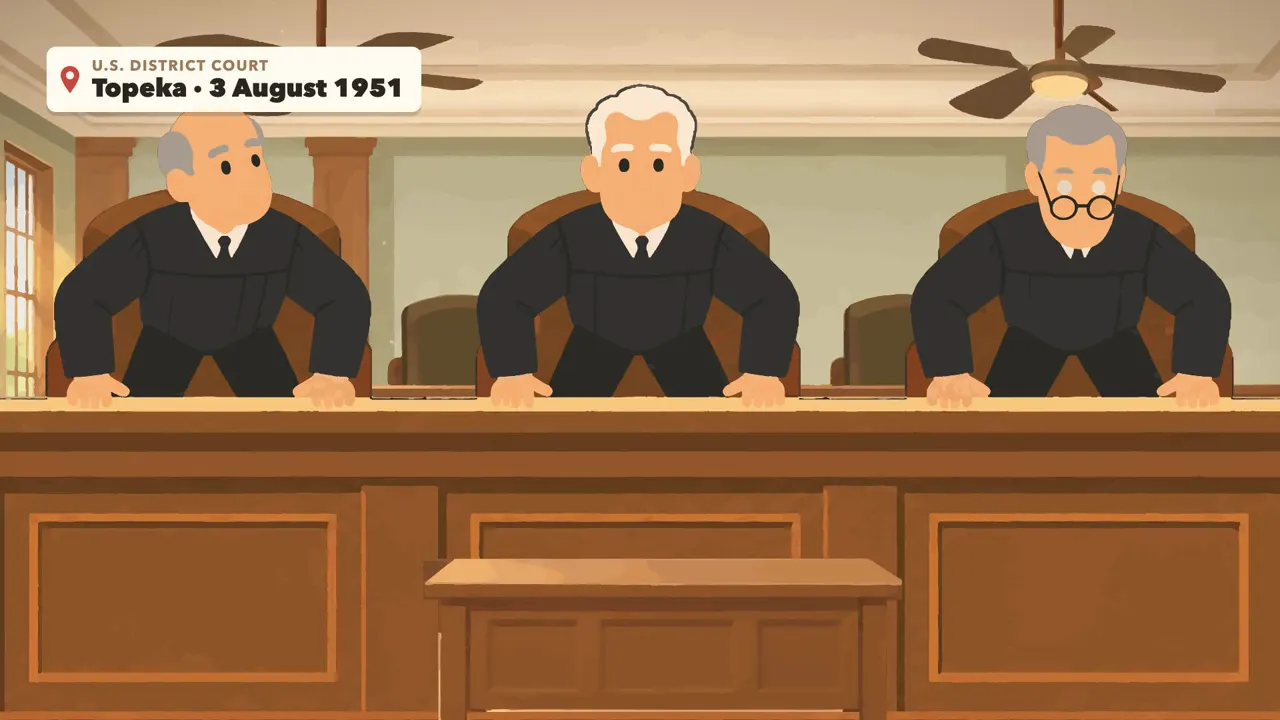
| D. Kan. (three judges: Huxman, Mellott, Hill), Aug. 3, 1951 | Plessy and Gong Lum "have not been overruled"; relief denied, judgment for the Board. | Brown v. Board of Education, 98 F. Supp. 797 (D. Kan. 1951) |
| E.D.S.C. (Parker, Waring, Timmerman), June 23, 1951 | Segregation upheld; equalization ordered; Waring, J., dissented | Briggs v. Elliott, 98 F. Supp. 529 (E.D.S.C. 1951) |
| Supreme Court, Jan. 28, 1952 | Judgment vacated and remanded to consider the equalization report (per curiam; Black and Douglas, JJ., dissented) | Briggs v. Elliott, 342 U.S. 350 (1952) |
| E.D.S.C. on remand (Parker, Dobie, Timmerman), Mar. 13, 1952 | Defendants proceeding "promptly and in good faith"; injunction against segregation denied again | Briggs v. Elliott, 103 F. Supp. 920 (E.D.S.C. 1952) |
| E.D. Va. (Dobie, Hutcheson, Bryan), Mar. 7, 1952 | Segregation upheld; Black school found unequal; equalization ordered | Davis v. County School Board, 103 F. Supp. 337 (E.D. Va. 1952) |
| Del. Ch. (Seitz, Chancellor), Apr. 1, 1952 | Plaintiffs ordered admitted to the white schools because their schools were inferior; the separate-but-equal doctrine left to the Supreme Court | Belton v. Gebhart, 32 Del. Ch. 343, 87 A.2d 862 (Del. Ch. 1952) |
| Del. Supreme Court (Southerland, C.J.), Aug. 28, 1952 | Affirmed | Gebhart v. Belton, 33 Del. Ch. 144, 91 A.2d 137 (Del. 1952) |
| D.D.C. | Complaint dismissed (no reported opinion found); certiorari granted before judgment in the Court of Appeals | 347 U.S. at 498; cert. granted, 344 U.S. 873 |
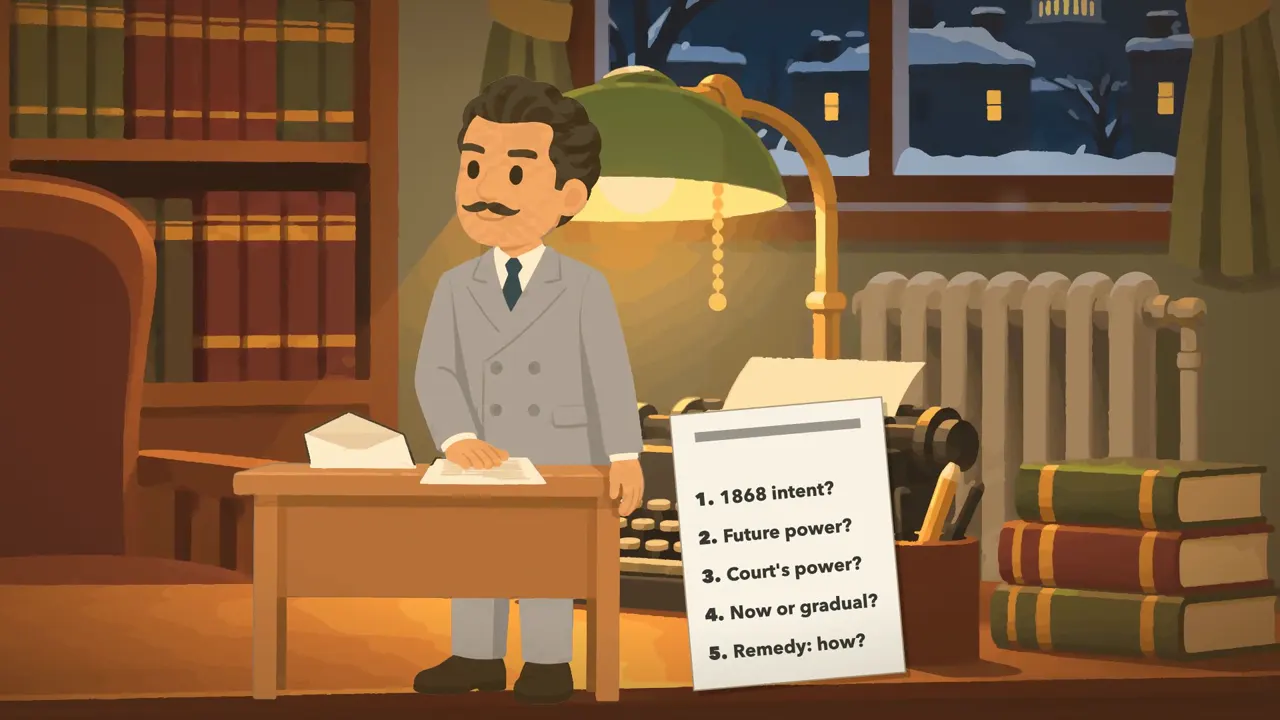
| Supreme Court, June 8, 1953 | All five cases restored to the docket for reargument on five questions | 345 U.S. 972 (1953) |
| Supreme Court, May 17, 1954 | Segregated public schools unconstitutional; cases restored to the docket on remedy (Questions 4 and 5) | Brown I, 347 U.S. 483; Bolling, 347 U.S. 497 |
| Supreme Court, May 31, 1955 | Judgments reversed (Delaware affirmed); remanded to admit the parties "with all deliberate speed" | Brown II, 349 U.S. 294 |
| D. Kan. on remand, Oct. 28, 1955 | Topeka's plan approved "as a good faith beginning"; jurisdiction retained | Brown v. Board of Education, 139 F. Supp. 468 (D. Kan. 1955) |
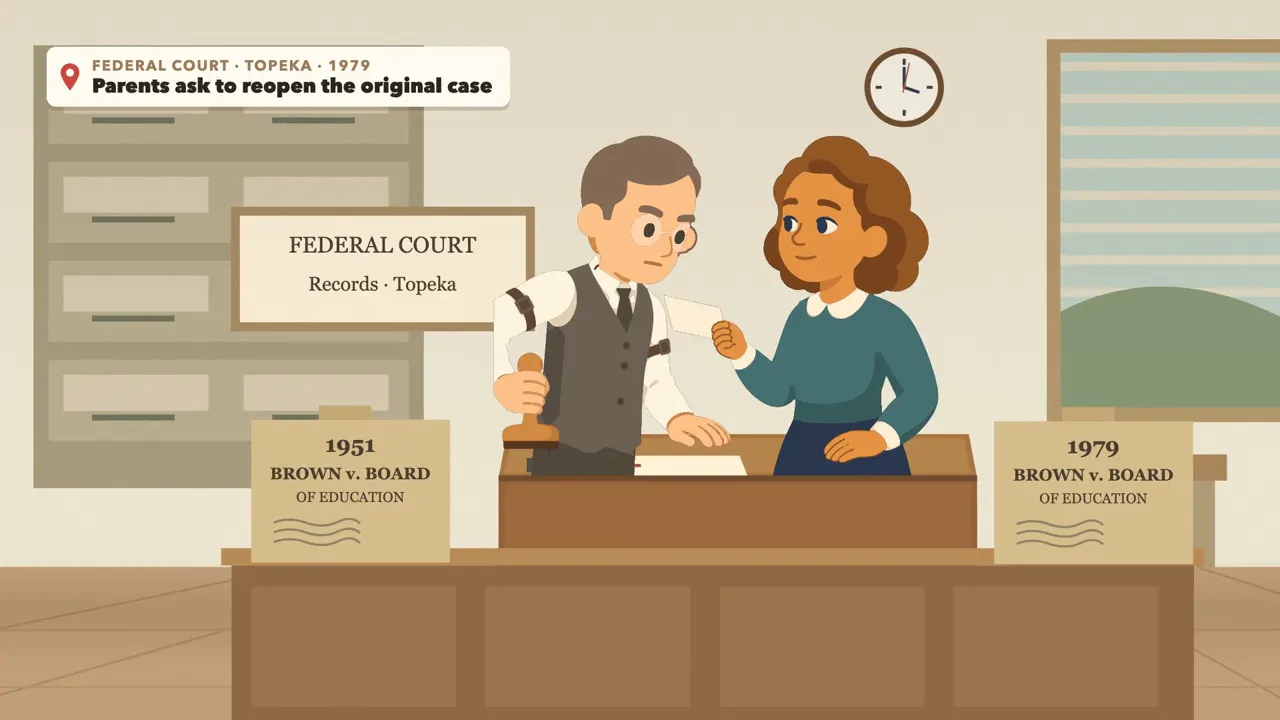
| D. Kan., Nov. 29, 1979 | New parents, among them Linda Brown Smith, allowed to intervene in the reopened case | Brown v. Board of Education, 84 F.R.D. 383 (D. Kan. 1979) |
The questions presented
- The Court framed the central question itself: "Does segregation of children in public schools solely on the basis of race, even though the physical facilities and other 'tangible' factors may be equal, deprive the children of the minority group of equal educational opportunities?" (347 U.S. at 493).
- In the District of Columbia, where the Fourteenth Amendment does not apply, does school segregation violate the Fifth Amendment's Due Process Clause? (347 U.S. at 498–499).
- On remedy (Brown II): should Black children "forthwith be admitted to schools of their choice", or may the Court "permit an effective gradual adjustment" (Questions 4 and 5, 345 U.S. 972; reprinted at 347 U.S. at 495–496 n.13)?
The holding and the rule
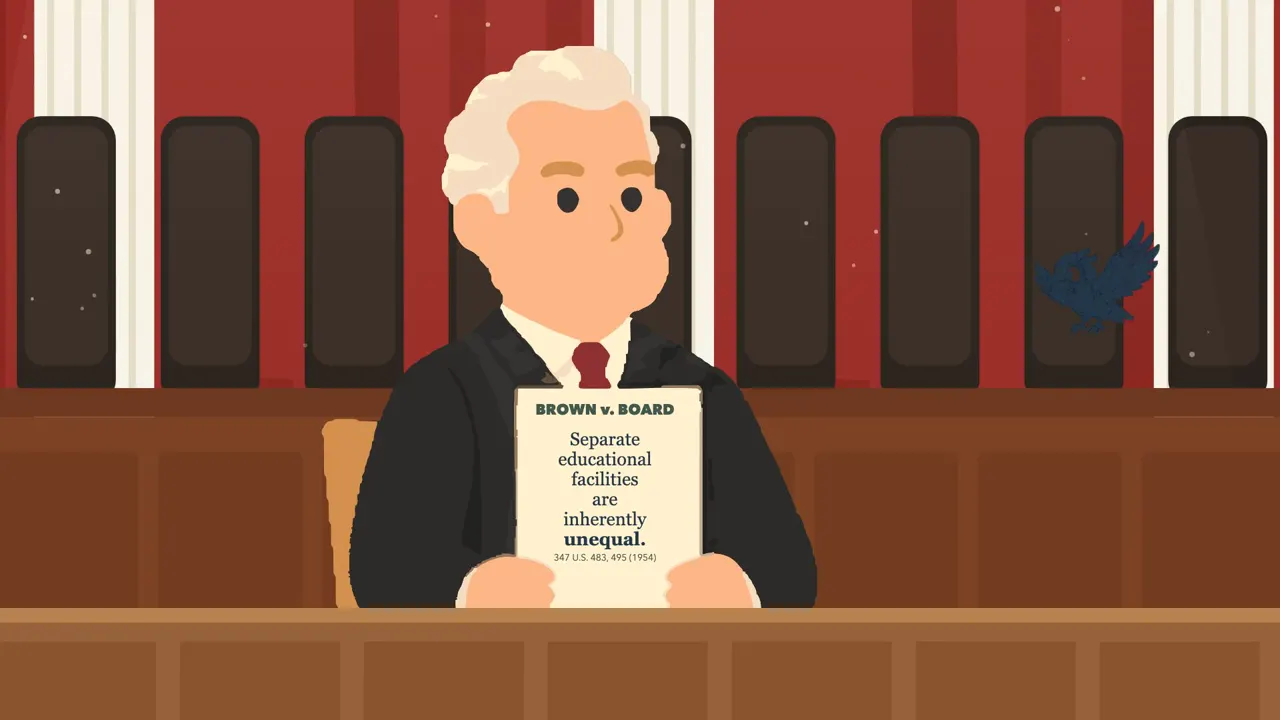
"We conclude that in the field of public education the doctrine of 'separate but equal' has no place. Separate educational facilities are inherently unequal. Therefore, we hold that the plaintiffs and others similarly situated for whom the actions have been brought are, by reason of the segregation complained of, deprived of the equal protection of the laws guaranteed by the Fourteenth Amendment." (347 U.S. at 495)
Bolling: "We hold that racial segregation in the public schools of the District of Columbia is a denial of the due process of law guaranteed by the Fifth Amendment to the Constitution." (347 U.S. at 500)
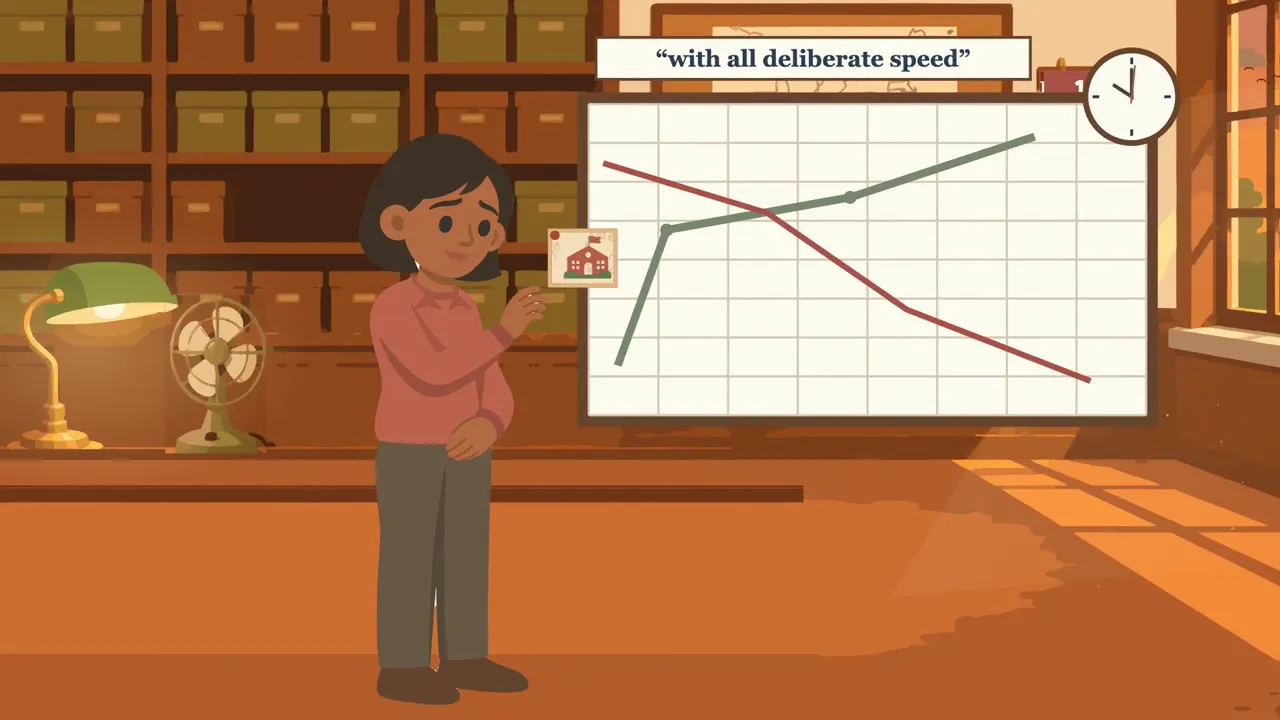
Brown II's rule on relief: the trial courts must "admit to public schools on a racially nondiscriminatory basis with all deliberate speed the parties to these cases" (349 U.S. at 301).
The reasoning, step by step
Step 1: history does not decide it. The reargument covered the Amendment's adoption "exhaustively". The Court's verdict on that material: "At best, they are inconclusive." (347 U.S. at 489). Public education in 1868 was also rudimentary (id. at 489–490).
Step 2: the precedents never tested the doctrine itself. "Separate but equal" first reached the Court late: it "did not make its appearance in this Court until 1896 in the case of Plessy v. Ferguson, supra, involving not education but transportation" (347 U.S. at 491). Of the graduate-school cases, from Gaines to McLaurin, the Court said: "In none of these cases was it necessary to re-examine the doctrine to grant relief to the Negro plaintiff." (id. at 492). Sweatt had "expressly reserved decision on the question whether Plessy v. Ferguson should be held inapplicable to public education" (id.).
Step 3: tangible equality cannot decide it. Here, unlike Sweatt, there were findings that the schools "have been equalized, or are being equalized" (347 U.S. at 492). So: "We must look instead to the effect of segregation itself on public education." (id.).
Step 4: judge education as it is now. "In approaching this problem, we cannot turn the clock back to 1868 when the Amendment was adopted, or even to 1896 when Plessy v. Ferguson was written." (347 U.S. at 492). Education "is the very foundation of good citizenship" (id. at 493), and:
"Such an opportunity, where the state has undertaken to provide it, is a right which must be made available to all on equal terms." (347 U.S. at 493)
Step 5: the intangibles from the university cases apply with more force to children. Sweatt relied on "those qualities which are incapable of objective measurement but which make for greatness in a law school"; McLaurin on a student's "ability to study, to engage in discussions and exchange views with other students, and, in general, to learn his profession" (347 U.S. at 493). Then:
"Such considerations apply with added force to children in grade and high schools. To separate them from others of similar age and qualifications solely because of their race generates a feeling of inferiority as to their status in the community that may affect their hearts and minds in a way unlikely ever to be undone." (347 U.S. at 494)
Step 6: the Kansas court's own finding. The Court quoted the finding of "a court which nevertheless felt compelled to rule against the Negro plaintiffs" (347 U.S. at 494):
"Segregation of white and colored children in public schools has a detrimental effect upon the colored children. The impact is greater when it has the sanction of the law; for the policy of separating the races is usually interpreted as denoting the inferiority of the negro group. A sense of inferiority affects the motivation of a child to learn." (347 U.S. at 494)
The brackets in the rest of the quoted finding ("[retard]", "racial[ly]") are the Supreme Court's.
Step 7: footnote 11 and the rejection of Plessy's reasoning. "Whatever may have been the extent of psychological knowledge at the time of Plessy v. Ferguson, this finding is amply supported by modern authority." (347 U.S. at 494). The sentence ends on footnote 11 (see below). "Any language in Plessy v. Ferguson contrary to this finding is rejected." (id. at 494–495).
Step 8: the remedy is postponed. "the formulation of decrees in these cases presents problems of considerable complexity" (347 U.S. at 495), so the cases were "restored to the docket" for argument on Questions 4 and 5 (id. at 495–496).
Bolling's reasoning. The Fifth Amendment "does not contain an equal protection clause", but "the concepts of equal protection and due process, both stemming from our American ideal of fairness, are not mutually exclusive" (347 U.S. at 499). "Classifications based solely upon race must be scrutinized with particular care, since they are contrary to our traditions and hence constitutionally suspect." (id.). And: "it would be unthinkable that the same Constitution would impose a lesser duty on the Federal Government" (id. at 500).
Footnote 11 is the citation attached to "modern authority" (347 U.S. at 494–495 n.11). It lists, in this order:
- K. B. Clark, Effect of Prejudice and Discrimination on Personality Development (Midcentury White House Conference on Children and Youth, 1950);
- Witmer and Kotinsky, Personality in the Making (1952), c. VI;
- Deutscher and Chein, "The Psychological Effects of Enforced Segregation: A Survey of Social Science Opinion", 26 J. Psychol. 259 (1948);
- Chein, "What are the Psychological Effects of Segregation Under Conditions of Equal Facilities?", 3 Int. J. Opinion and Attitude Res. 229 (1949);
- Brameld, "Educational Costs", in Discrimination and National Welfare (MacIver, ed., 1949), 44–48;
- Frazier, The Negro in the United States (1949), 674–681;
- "And see generally Myrdal, An American Dilemma (1944)."
The first item is Kenneth Clark's 1950 paper, which the Library of Congress links to the Clarks' "doll test" research. The footnote became one of the most debated parts of the opinion. The National Archives notes that "some constitutional scholars" objected that the decision "went against legal tradition by relying heavily on data supplied by social scientists rather than precedent or established law."
Concurrences and dissents
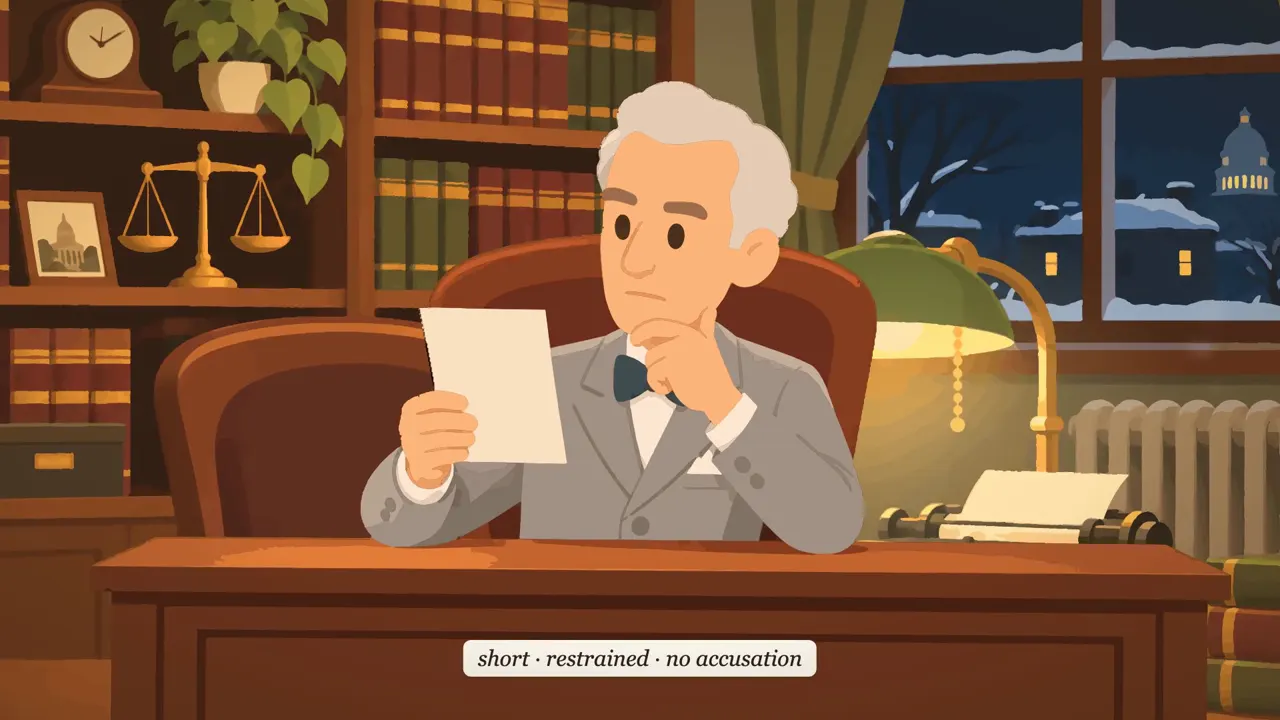
There were none in Brown I, Bolling or Brown II. The Library of Congress records that Warren "carefully engineered a unanimous vote, one without dissents or separate concurring opinions". His memorandum of May 7, 1954, set out his view that "opinions should be short, readable by the lay public, non-rhetorical, unemotional and, above all, non-accusatory." Two drafts never published are documented in secondary sources: Justice Reed "drafted what could have become an opinion dissenting" but "decided by Spring 1954 not to use that draft" (Barrett, 2018), and Justice Jackson "crafted six draft opinions in Brown" that he never filed (SCOTUSblog interview with David M. O'Brien, 2017).
The dissents that mattered were in the lower courts and in Plessy:
- Judge J. Waties Waring (Briggs, 1951): "Segregation is per se inequality." (98 F. Supp. at 548).
- Justice John Marshall Harlan (Plessy, 1896): "Our Constitution is color-blind, and neither knows nor tolerates classes among citizens." (163 U.S. at 559).
Doctrine map
| Case | What it decided | How Brown used it |
|---|
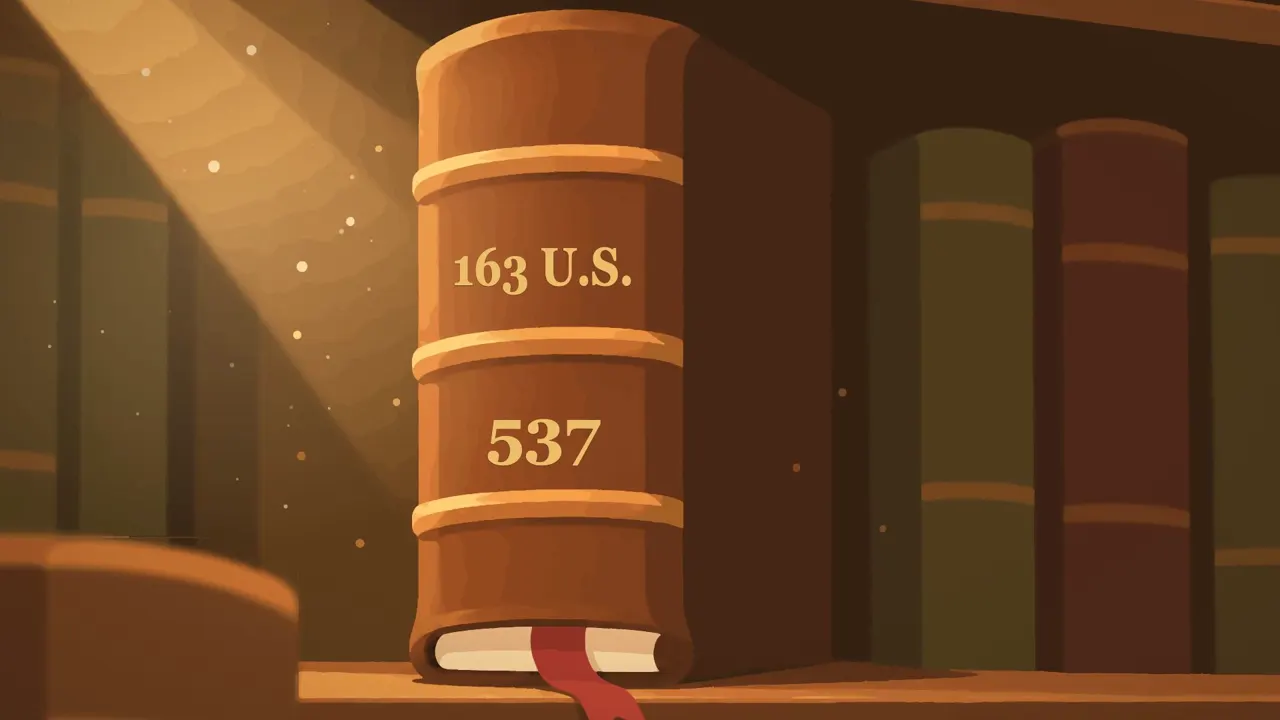
| Plessy v. Ferguson, 163 U.S. 537 (1896) (7–1; Harlan, J., dissenting; Brewer, J., not participating) | Upheld Louisiana's separate railway-car law; the "underlying fallacy" of the challenge was "the assumption that the enforced separation of the two races stamps the colored race with a badge of inferiority" (at 551) | "has no place" in public education (347 U.S. at 495); contrary language "rejected" |
| Missouri ex rel. Gaines v. Canada, 305 U.S. 337 (1938) (McReynolds, J., joined by Butler, J., dissenting) | A state must give a Black applicant legal education within its borders; "petitioner's right was a personal one" (at 351) | Cited as a graduate-school case decided without re-examining Plessy (347 U.S. at 492) |
| Sweatt v. Painter, 339 U.S. 629 (1950) | Texas's separate law school was not equal; Sweatt must be admitted to the University of Texas Law School (at 636) | Source of the "intangible" factors (347 U.S. at 493) |
| McLaurin v. Oklahoma State Regents, 339 U.S. 637 (1950) | A Black graduate student admitted but made "to sit apart at a designated desk in an anteroom adjoining the classroom" (at 640) was denied equal protection | Source of the "ability to study" passage (347 U.S. at 493) |
| Brown I and Bolling (1954); Brown II (1955) | This case | — |
| Cooper v. Aaron, 358 U.S. 1 (1958) | State officials bound by Brown; no delay for violence | Enforced Brown against state resistance |
| Griffin v. County School Board, 377 U.S. 218 (1964) | Closing Prince Edward County's schools while aiding private white schools denied equal protection | "The time for mere 'deliberate speed' has run out" (at 234) |
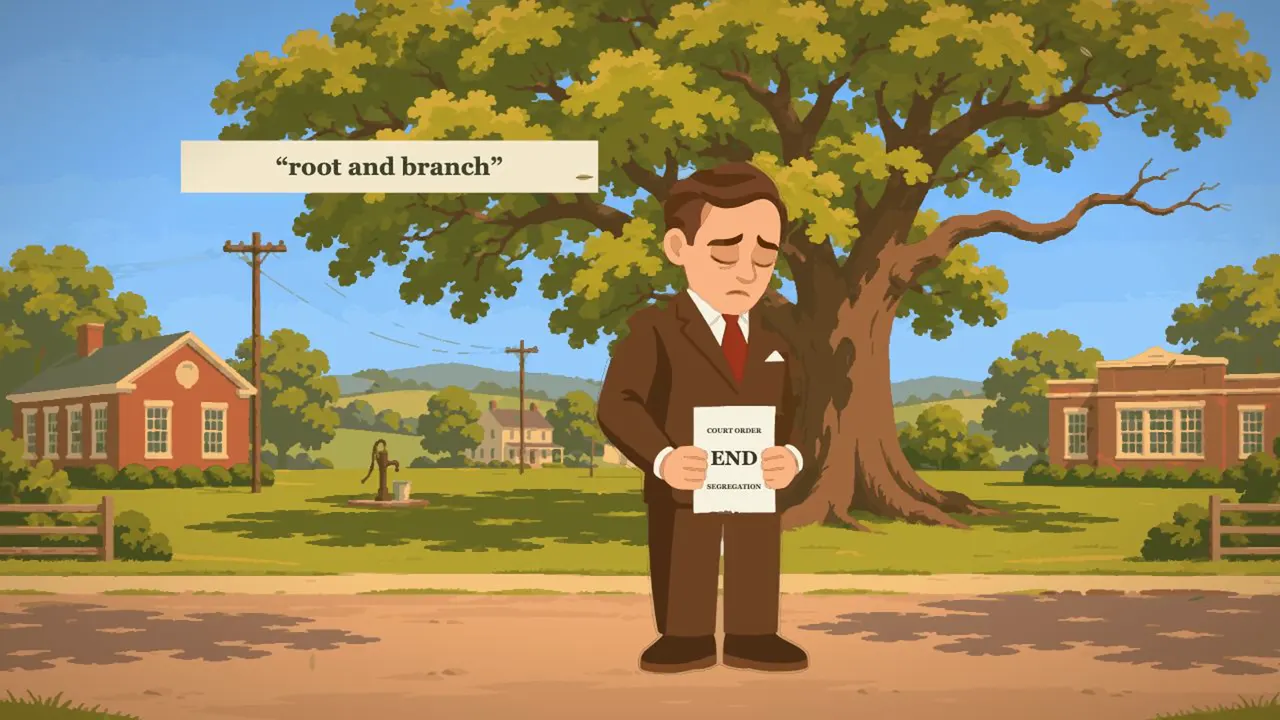
| Green v. County School Board, 391 U.S. 430 (1968) | Freedom-of-choice plan that left a dual system was not enough | Duty to convert "root and branch" (at 438) |
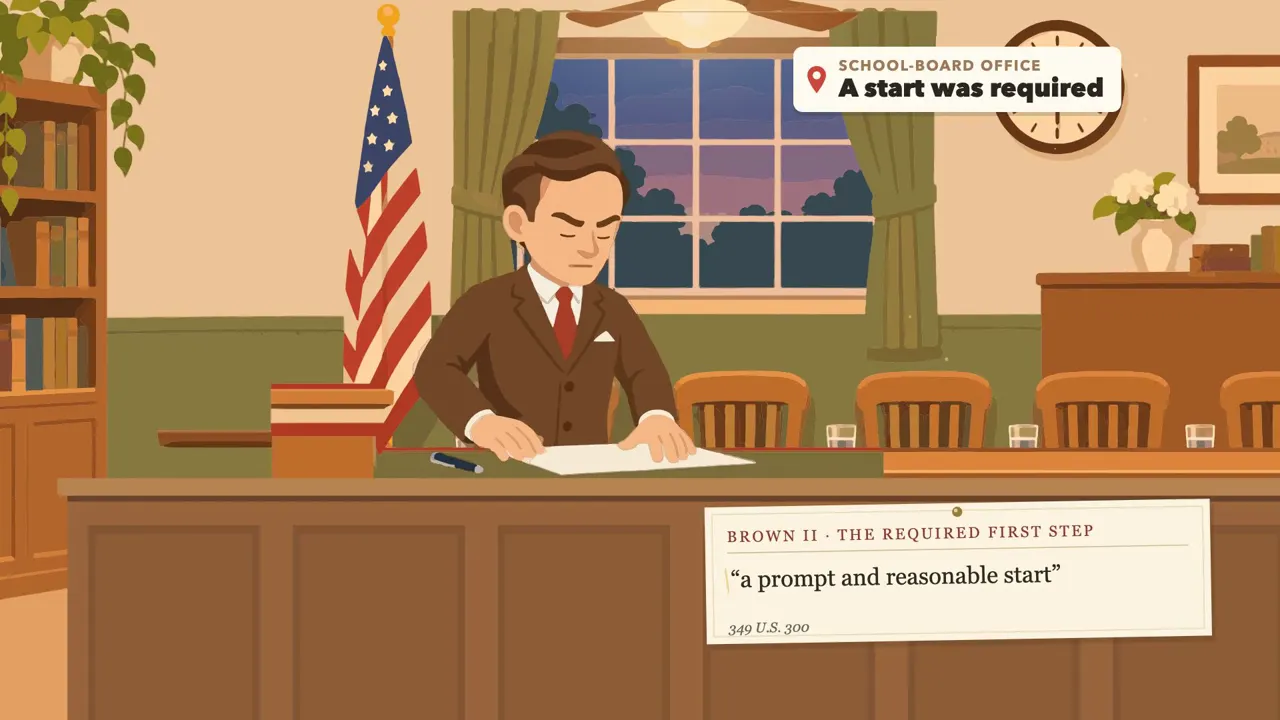
Area of law: equal protection (Fourteenth Amendment); due process (Fifth Amendment, Bolling); equitable remedies. Brown's test: whether segregation itself, not only tangible facilities, denies equal educational opportunity. Brown II's test: a good-faith, prompt and reasonable start; the burden on school authorities to justify more time; trial-court supervision.
What happened next
Brown II (1955). The Court required "a prompt and reasonable start toward full compliance" and put the burden on the defendants "to establish that such time is necessary in the public interest and is consistent with good faith compliance at the earliest practicable date" (349 U.S. at 300). Courts could weigh "the physical condition of the school plant, the school transportation system, personnel, revision of school districts and attendance areas" (id. at 300–301), but "the vitality of these constitutional principles cannot be allowed to yield simply because of disagreement with them" (id. at 300). Four cases went back to federal district courts; Delaware's went to "the Supreme Court of Delaware" (id. at 301).
Topeka (1955). On remand the three-judge court found that "complete desegregation has not been accomplished" but approved the plan "as a good faith beginning" (139 F. Supp. at 470).
Massive resistance. On March 12, 1956, the "Declaration of Constitutional Principles", known as the Southern Manifesto, was introduced in Congress; the House historian records that it was "signed by 82 Representatives and 19 Senators" and urged southerners to use all "lawful means" of resistance. The Library of Congress describes "massive resistance" in Prince Edward County as "closing the public schools and supporting new, white-only, private schools." The Supreme Court later found that "the county's public schools did not reopen in the fall of 1959" (377 U.S. at 222–223) and said "There has been entirely too much deliberation and not enough speed" (id. at 229).
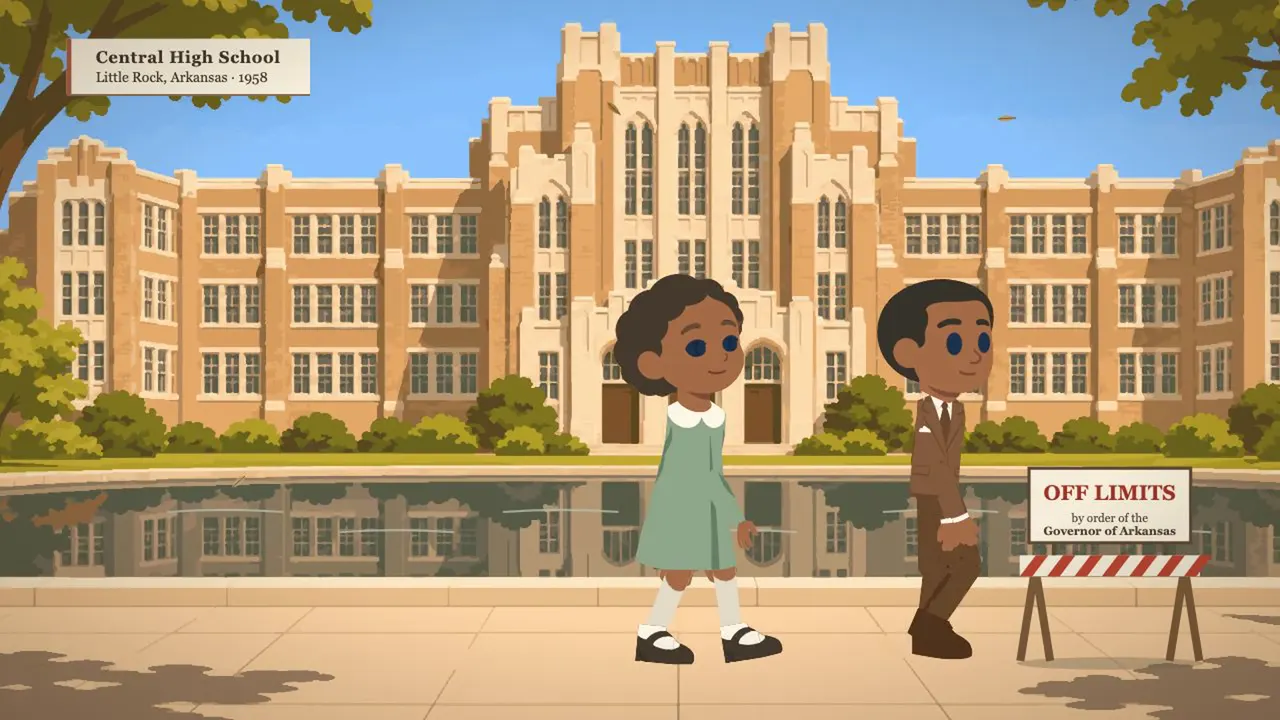
Cooper v. Aaron (1958). After the Arkansas Governor and legislature opposed desegregation at Little Rock's Central High School, the school board sought a two-and-a-half-year delay; the District Court granted it, citing "chaos, bedlam and turmoil" (358 U.S. at 13). The Supreme Court refused. Its opinion, issued in the names of all nine justices, held that "The constitutional rights of respondents are not to be sacrificed or yielded to the violence and disorder which have followed upon the actions of the Governor and Legislature" (id. at 16), and:
"It follows that the interpretation of the Fourteenth Amendment enunciated by this Court in the Brown case is the supreme law of the land, and Art. VI of the Constitution makes it of binding effect on the States" (358 U.S. at 18)
It added: "No state legislator or executive or judicial officer can war against the Constitution without violating his undertaking to support it." (id.). Frankfurter, J., concurred separately.
Green (1968). In New Kent County, Virginia, "In three years of operation not a single white child has chosen to attend Watkins school" and "85% of the Negro children in the system still attend the all-Negro Watkins school" (391 U.S. at 441). The board had a duty to convert to a unitary system "in which racial discrimination would be eliminated root and branch" (id. at 437–438; the words "root and branch" fall on p. 438), and "The burden on a school board today is to come forward with a plan that promises realistically to work, and promises realistically to work now." (id. at 439).
Topeka again (1979). On August 22, 1979, "certain Black parents and school children" filed motions in the original case (84 F.R.D. at 386); the court granted intervention (id. at 405). The caption lists "Charles and Kimberly Smith, minor children, by their Mother and next friend, Linda Brown Smith" (id. at 383).
The people. Linda Brown was born February 20, 1943, in Topeka (Supreme Court Historical Society). The NAACP Legal Defense Fund reports that she "received certification in early childhood education from Kansas State University", helped establish "four libraries for preschool children" through The Brown Foundation, and "died March 25, 2018, at age 75, in Topeka, Kansas." Oliver Brown lived from 1918 to 1961 (Kansas Historical Society); Barbara Johns from 1935 to 1991 (Library of Virginia). The Brown v. Board of Education National Historic Site was created on the grounds of Monroe Elementary in 1992; the NPS now titles it Brown v. Board of Education National Historical Park.
Common myths vs the record
| Myth | Record |
|---|
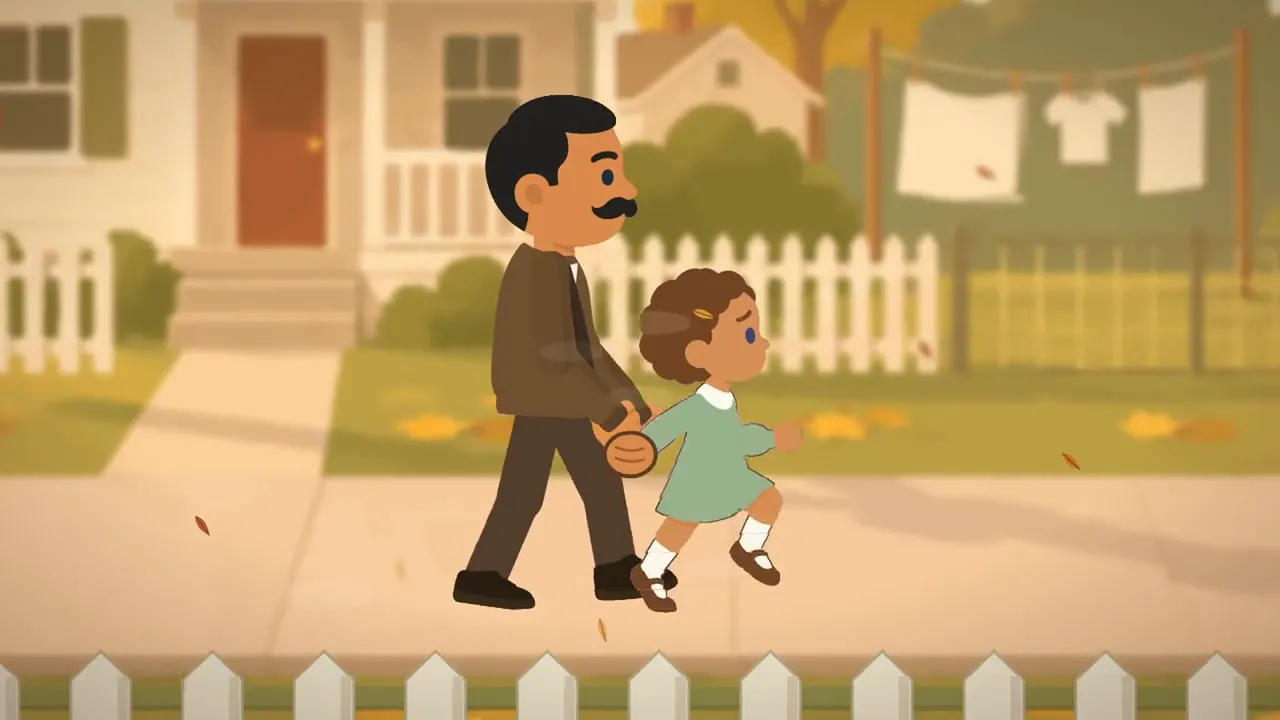
| Linda Brown's long walk started the case. | NPS: "The Topeka NAACP deliberately organized a class-action challenge and recruited participating families. Black students had bus transportation but were assigned to schools according to race." Topeka also gave Black children free transport (98 F. Supp. at 798). |
| Oliver Brown was the only plaintiff. | NPS: "The Topeka case involved 13 parents acting on behalf of 20 children." |
| He was named first because of the alphabet. | NPS: there were two Browns (Darlene and Oliver); Oliver was chosen "because he was the only man in the Topeka plaintiff group". |
| Brown overruled Plessy entirely. | The holding is limited: "in the field of public education the doctrine of 'separate but equal' has no place" (347 U.S. at 495). Brown's holding is confined to public education. |
| The 1954 decision desegregated schools at once. | Brown I ordered no decree and restored the cases to the docket (347 U.S. at 495–496); NPS: it "did not specify how or when school systems were required to desegregate." |
| The Topeka schools were badly unequal. | The trial court found them "comparable" (98 F. Supp. at 798). That is why Topeka framed the pure question of segregation itself. |
| Warren's written opinion says "unanimously". | The word is not in the printed opinion. The LOC and Barrett both say Warren added it from the bench, though they report his spoken words differently ("we unanimously hold" vs. "We conclude, unanimously"). |
Study questions
- Which five cases were decided on May 17, 1954, and why was Bolling a separate opinion?
- What did the Topeka court find about its schools, and why did that matter?
- Why did that court rule for the Board despite finding harm?
- Why did the Court find the history of the Fourteenth Amendment "inconclusive"?
- How did Sweatt and McLaurin prepare the ground for Brown, and why had they not required overruling Plessy?
- What role does footnote 11 play in the opinion? Would the holding stand without it?
- How does Bolling get to an equal-protection-style result under a Due Process Clause?
- Brown II gave the trial courts the remedy. What were the advantages and costs of "all deliberate speed"?
- What did Cooper v. Aaron add to Brown, and why did the Court issue it in the names of all nine justices?
- Green said a plan must work "now". How does that change the meaning of compliance with Brown?
Hypothetical 1. In 1956 a county closes its public schools and funds tuition grants for whites-only private schools. Using Brown, Cooper and Griffin, what can the Black families argue, and what remedy might a court order?
Hypothetical 2. A two-school district in 1966 lets families choose a school each year; after three years no white child has chosen the historically Black school. How would a court apply Green?